Description
Chemical Identity
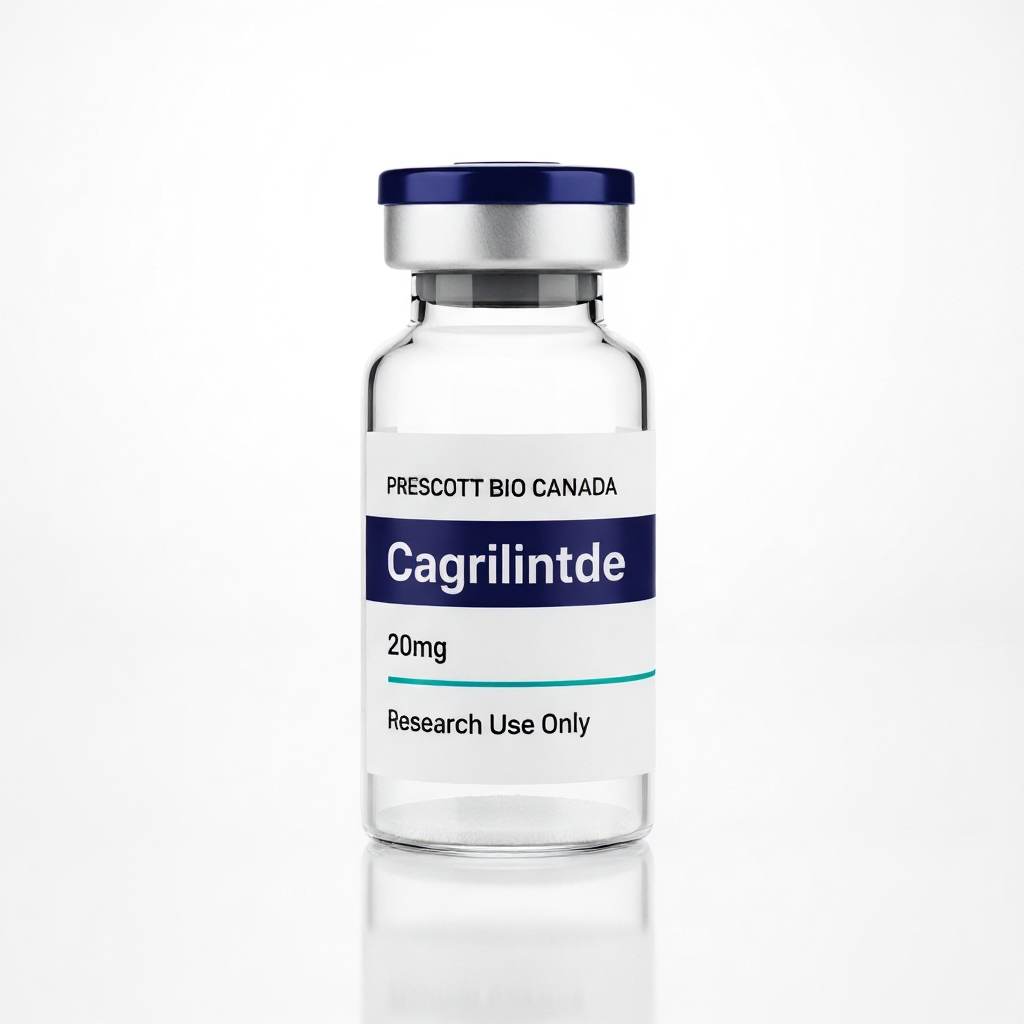
Cagrilintide analytical reference compound. Molecular weight 4030 Da. Also known as: NN9838, ZP4982, Long-acting amylin analog. Research status: Phase3.
Research Overview
Cagrilintide is a long-acting acylated amylin analog developed by Novo Nordisk for the treatment of obesity. It acts on amylin receptors (AMY1 and AMY3) and calcitonin receptors to reduce appetite and food intake. It is being developed both as a standalone therapy and in combination with semaglutide (CagriSema), with phase 3 clinical trials demonstrating significant weight loss.
Cagrilintide exerts its pharmacological effects through activation of amylin receptors and calcitonin receptors in the central nervous system and peripheral tissues. Amylin receptors are heterodimeric complexes formed by the calcitonin receptor (CTR) with receptor activity-modifying proteins (RAMPs). The AMY1 receptor (CTR plus RAMP1), AMY3 receptor (CTR plus RAMP3), and the calcitonin receptor itself are the primary targets.
The central mechanism of appetite suppression involves activation of neurons in the area postrema and nucleus of the solitary tract in the brainstem, regions that are accessible to circulating peptides due to their location outside the blood-brain barrier. Activation of amylin receptors in these regions produces signals of meal termination and satiety, reducing meal size and overall food intake.
Key published studies on Cagrilintide include: “Cagrilintide: A Long-Acting Amylin Analog for the Treatment of Obesity” (Cardiology in Review, 2024); “Efficacy and safety of cagrilintide plus semaglutide in type 2 diabetes: a multicentre, randomised, double-blind, phase 2 trial” (The Lancet, 2023); “Once-weekly cagrilintide for weight management in people with overweight and obesity: a multicentre, randomised, double-blind, placebo-controlled and active-controlled, dose-finding phase 2 trial” (The Lancet, 2021). These findings should be interpreted within the context of the experimental models and conditions described in each publication.
Research Context
Cagrilintide (development codes NN9838 and ZP4982) is a long-acting analog of human amylin (also known as islet amyloid polypeptide, or IAPP) developed by Novo Nordisk for the treatment of obesity. Amylin is a 37-amino acid peptide hormone co-secreted with insulin by pancreatic beta cells in response to nutrient intake. It plays a physiological role in regulating appetite, gastric emptying, and postprandial glucose metabolism.
The native amylin peptide has an extremely short plasma half-life of approximately 13 minutes and is prone to aggregation and fibrillation, making it unsuitable for therapeutic use in its unmodified form. Cagrilintide was engineered to overcome these limitations through strategic amino acid modifications and acylation with a C18 fatty diacid side chain that enables non-covalent albumin binding, extending the half-life to approximately 7 days and allowing once-weekly subcutaneous dosing.
Cagrilintide represents a new therapeutic approach to obesity that is distinct from and complementary to the GLP-1 receptor agonist class (which includes semaglutide and liraglutide). While GLP-1 agonists primarily act on the GLP-1 receptor in the brain and gut, cagrilintide acts through amylin receptors (AMY1 and AMY3) and calcitonin receptors, engaging different neuronal circuits involved in appetite regulation. This mechanistic complementarity forms the basis for the CagriSema combination program, which pairs cagrilintide with semaglutide.
Specifications
| Sequence | K(eicosanedioyl-gGlu)CNTATCATQRLAELRHSSNNFGPILPPTNVGSNTP-NH2 |
| Molecular Weight | 4030 Da |
| Molecular Formula | C194H312N54O59S2 |
| CAS Number | 2170438-03-2 |
| Purity | >=98% (HPLC) |
| Appearance | White to off-white lyophilized powder |
| Format | Lyophilized powder, sterile filtered |
| Solubility | Soluble in bacteriostatic water, sterile water, or normal saline |
| Storage | Store at -20°C (lyophilized). Reconstituted: 2-8°C, use within 30 days |
| Shipping | Ambient temperature (stable in lyophilized form) |
Each lot is accompanied by a Certificate of Analysis (COA) documenting purity, identity, and endotoxin testing results.
Research Applications
Cagrilintide reference compound has been documented in the published scientific literature across the following in vitro and preclinical research areas:
- Obesity treatment
- Weight management
- Metabolic disease research
Researchers are advised to consult the primary literature for detailed experimental protocols, concentrations, and conditions relevant to their specific area of investigation involving Cagrilintide.
Storage and Handling
Cagrilintide is supplied as a lyophilized powder and should be stored at -20°C upon receipt for long-term stability. Protect from light, moisture, and repeated temperature fluctuations. Allow the sealed vial to equilibrate to room temperature before opening to prevent condensation and moisture absorption.
For reconstitution, add sterile water or an appropriate buffer slowly along the vial wall to avoid foaming. Gently swirl to dissolve — do not vortex. Reconstituted Cagrilintide solutions should be stored at 2-8°C and used within 30 days. Aliquoting is recommended to minimize freeze-thaw cycles. Consult the Safety Data Sheet (SDS) for detailed handling and disposal guidance.
For laboratory research use only (in vitro). Not for human or animal use. Not for diagnostic, therapeutic, or clinical purposes. Cagrilintide is supplied as an analytical reference compound for use by qualified research personnel at accredited institutions. Prescott Bio Canada does not provide guidance on administration, dosing, or use in living organisms.