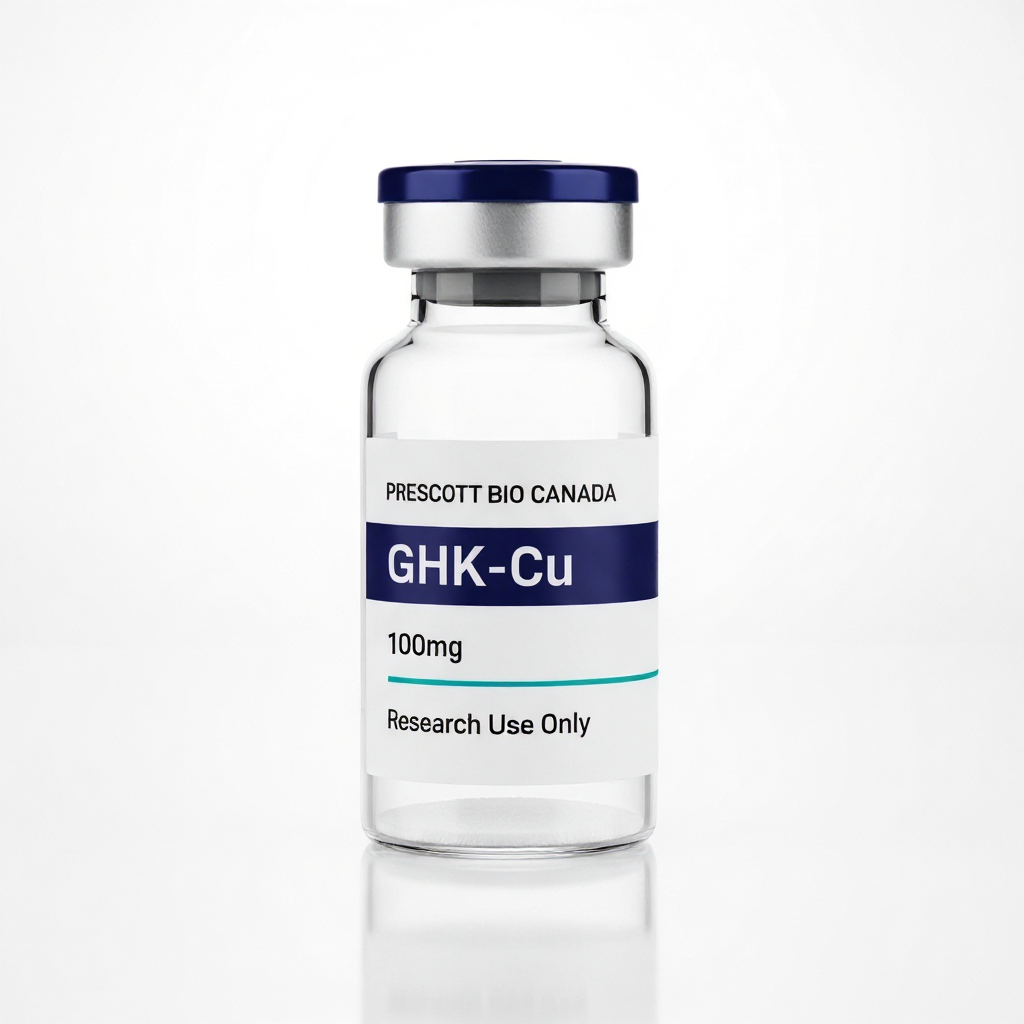
Description
Chemical Identity
GHK-Cu (glycyl-L-histidyl-L-lysine:copper(II)) is a naturally occurring copper-binding tripeptide with the molecular formula C14H24CuN6O4 and a molecular weight of 403.93 Da (CAS number 49557-75-7). First identified in human plasma by Loren Pickart in 1973, GHK-Cu consists of three amino acids (Gly-His-Lys) chelated to a copper(II) ion. The peptide is present in human blood, saliva, and urine, with plasma concentrations declining with age.
GHK-Cu is also known as Copper Peptide GHK-Cu, Copper Tripeptide-1, and Glycyl-L-Histidyl-L-Lysine:Copper(II). The copper(II) ion is essential for the biological activity of the complex, as it is required for the function of numerous metalloenzymes involved in tissue repair, including lysyl oxidase (collagen cross-linking), superoxide dismutase (antioxidant defense), and cytochrome c oxidase (mitochondrial respiration).
| Property | Value |
|---|---|
| Molecular Formula | C14H24CuN6O4 |
| Molecular Weight | 403.93 Da |
| CAS Number | 49557-75-7 |
| Sequence | Gly-His-Lys (chelated to Cu2+) |
| Research Status | Preclinical |
Research Overview
GHK-Cu has been investigated across preclinical research spanning wound healing, tissue remodeling, skin biology, anti-inflammatory signaling, and gene expression modulation. The mechanism of action involves copper delivery to metalloenzymes, stimulation of extracellular matrix synthesis, and broad gene expression modulation affecting over 4,000 human genes according to Connectivity Map analysis. GHK-Cu stimulates production of collagen types I, III, and V, increases glycosaminoglycan synthesis (decorin, heparan sulfate, chondroitin sulfate), and modulates matrix metalloproteinase activity to balance tissue degradation and rebuilding.
GHK-Cu is widely used in cosmetic formulations and is being investigated for broader therapeutic applications in preclinical research settings.
Key areas of published research include:
- Wound Healing and Tissue Repair: GHK-Cu has demonstrated acceleration of wound closure, increased angiogenesis, and enhanced collagen deposition in preclinical wound models. The peptide attracts immune cells to injury sites, stimulates fibroblast proliferation, and promotes the synthesis of new extracellular matrix components necessary for tissue reconstruction.
- Skin Regeneration: Research published in BioMed Research International (2015) characterized GHK-Cu as a natural modulator of multiple cellular pathways in skin regeneration, including stimulation of dermal fibroblast activity, increased skin thickness, and improved skin elasticity in aging models.
- Antioxidant and Anti-Aging Properties: Research published in Oxidative Medicine and Cellular Longevity (2012) examined the role of GHK-Cu in prevention of oxidative stress and degenerative conditions associated with aging, including its capacity to upregulate antioxidant enzyme expression and reduce oxidative damage markers.
GHK-Cu remains a preclinical research compound for therapeutic applications. Its use in cosmetic products is well-established, but controlled clinical trials for medical indications are limited.
Specifications
All GHK-Cu supplied by Prescott Bio Canada is manufactured to research-grade standards.
| Specification | Detail |
|---|---|
| Purity | >98% (HPLC) |
| Form | Lyophilized powder |
| Appearance | Blue to blue-green powder (copper complex) |
| Storage (lyophilized) | -20°C, protected from light |
| Storage (reconstituted) | 2-8°C, use within 30 days |
| Solubility | Soluble in bacteriostatic water, sterile water, or normal saline |
Each vial is accompanied by a Certificate of Analysis (COA) documenting purity, identity, and endotoxin testing.
Research Applications
GHK-Cu is supplied exclusively for in vitro and in vivo laboratory research. Published experimental applications include:
- Wound healing and tissue repair mechanism studies
- Collagen synthesis and extracellular matrix remodeling research
- Skin biology and dermal fibroblast proliferation studies
- Antioxidant and oxidative stress protection research
- Gene expression modulation and Connectivity Map analysis studies
- Copper metalloenzyme activity and copper delivery research
Researchers should consult the primary literature and institutional review protocols before designing experiments with GHK-Cu.
Storage and Handling
Lyophilized powder: Store at -20°C in the original sealed vial, protected from light and moisture. Under these conditions, GHK-Cu maintains stability for up to 24 months.
Reconstituted solution: Reconstitute with bacteriostatic water or sterile water to the desired concentration. Store reconstituted GHK-Cu at 2-8°C and use within 30 days. Avoid repeated freeze-thaw cycles. The reconstituted solution may have a slight blue tint due to the copper complex.
Handling precautions: This product is intended for research use only (RUO). Not for human or veterinary diagnostic or therapeutic use. Handle using standard laboratory safety practices including appropriate PPE.