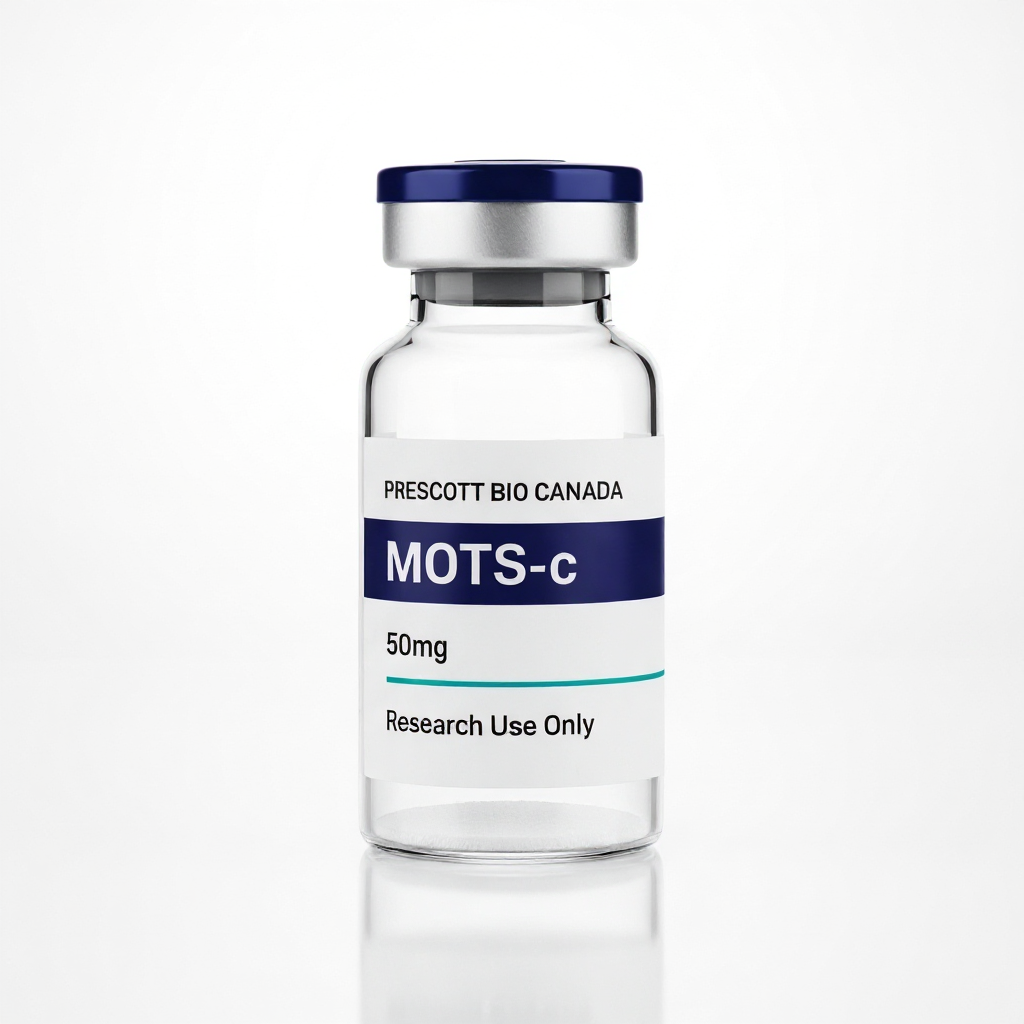
Description
Chemical Identity
MOTS-c (Mitochondrial Open Reading Frame of the 12S rRNA Type-c) is a 16-amino acid mitochondrial-derived peptide with the molecular formula C101H152N28O22S2 and a molecular weight of 2174.6 Da (CAS number 1627580-64-6). The amino acid sequence is Met-Arg-Trp-Gln-Glu-Met-Gly-Tyr-Ile-Phe-Tyr-Pro-Arg-Lys-Leu-Arg. MOTS-c is encoded within the mitochondrial genome (12S rRNA gene) rather than the nuclear genome, making it part of the emerging class of mitochondrial-derived peptides (MDPs).
MOTS-c was first identified and characterized in 2015 as a signaling peptide that regulates metabolic homeostasis. Its circulating levels decline with age, positioning it as a candidate biomarker and research target for metabolic disease and aging.
| Property | Value |
|---|---|
| Molecular Formula | C101H152N28O22S2 |
| Molecular Weight | 2174.6 Da |
| CAS Number | 1627580-64-6 |
| Sequence | Met-Arg-Trp-Gln-Glu-Met-Gly-Tyr-Ile-Phe-Tyr-Pro-Arg-Lys-Leu-Arg |
| Research Status | Preclinical |
Research Overview
MOTS-c has been investigated in preclinical research as a metabolic regulator and exercise mimetic. The primary mechanism involves activation of AMP-activated protein kinase (AMPK), the master cellular energy sensor. MOTS-c activates AMPK indirectly through inhibition of methylene-tetrahydrofolate dehydrogenase/cyclohydrolase (MTHFD2) in the folate cycle, leading to accumulation of the endogenous AMPK activator AICAR (5-aminoimidazole-4-carboxamide ribonucleotide).
AMPK activation triggers a cascade of metabolic changes including enhanced glucose uptake, increased fatty acid oxidation, inhibition of lipogenesis, and stimulation of mitochondrial biogenesis. MOTS-c has been described as an “exercise mimetic” because it recapitulates many of the metabolic benefits of physical exercise through this AMPK-dependent pathway.
Key areas of published research include:
- Metabolic Homeostasis: Preclinical studies demonstrate that MOTS-c improves insulin sensitivity and glucose metabolism in diet-induced obesity models. These effects are mediated through AMPK activation and subsequent enhancement of glucose disposal and fatty acid oxidation.
- Exercise Mimetic Properties: MOTS-c has been shown to improve physical capacity in aging mouse models and to activate metabolic pathways that overlap with those stimulated by exercise, supporting its characterization as a mitochondrial-derived exercise mimetic.
- Aging and Mitochondrial Signaling: Circulating MOTS-c levels decline with age in humans, and its administration in aged animal models improves metabolic parameters. This age-dependent decline has generated interest in MOTS-c as both a biomarker of mitochondrial function and a potential intervention target in aging research.
MOTS-c remains a preclinical research compound. Its identification as a mitochondrial-derived peptide has opened a new field of mitochondrial genomics and signaling research.
Specifications
All MOTS-c supplied by Prescott Bio Canada is manufactured to research-grade standards.
| Specification | Detail |
|---|---|
| Purity | >98% (HPLC) |
| Form | Lyophilized powder |
| Appearance | White to off-white powder |
| Storage (lyophilized) | -20°C, protected from light |
| Storage (reconstituted) | 2-8°C, use within 30 days |
| Solubility | Soluble in bacteriostatic water, sterile water, or normal saline |
Each vial is accompanied by a Certificate of Analysis (COA) documenting purity, identity, and endotoxin testing.
Research Applications
MOTS-c is supplied exclusively for in vitro and in vivo laboratory research. Published experimental applications include:
- AMPK signaling and metabolic regulation research
- Mitochondrial-derived peptide biology and mitochondrial genomics
- Insulin sensitivity and glucose metabolism studies
- Exercise mimetic and physical performance research in aging models
- Folate cycle and de novo purine biosynthesis pathway studies
- Aging biomarker research and geroscience applications
Researchers should consult the primary literature and institutional review protocols before designing experiments with MOTS-c.
Storage and Handling
Lyophilized powder: Store at -20°C in the original sealed vial, protected from light and moisture. Under these conditions, MOTS-c maintains stability for up to 24 months. The methionine residues are susceptible to oxidation; minimize exposure to oxidizing conditions.
Reconstituted solution: Reconstitute with bacteriostatic water or sterile water to the desired concentration. Store reconstituted MOTS-c at 2-8°C and use within 30 days. Avoid repeated freeze-thaw cycles.
Handling precautions: This product is intended for research use only (RUO). Not for human or veterinary diagnostic or therapeutic use. Handle using standard laboratory safety practices including appropriate PPE.