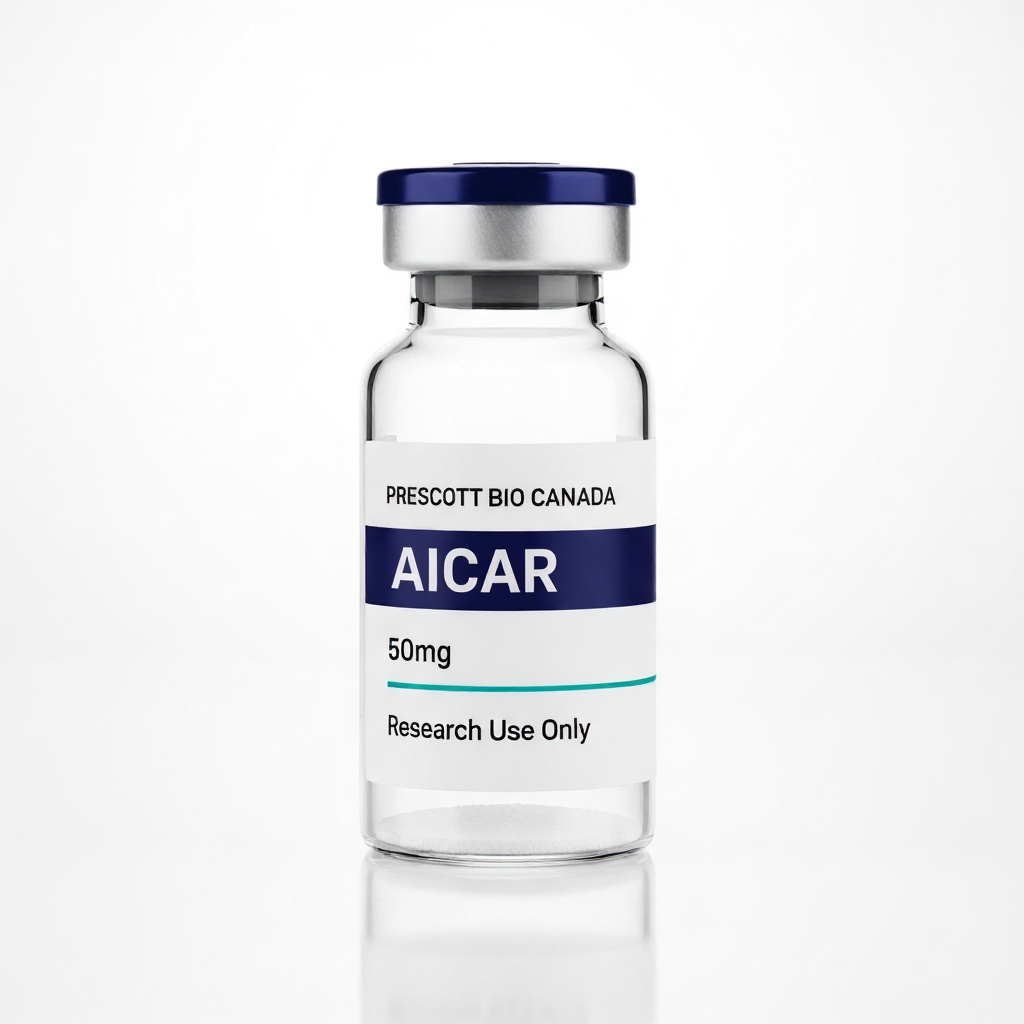
Description
Chemical Identity
AICAR (5-Aminoimidazole-4-carboxamide ribonucleoside) is a cell-permeable nucleoside analog with the molecular formula C9H14N4O5 and a molecular weight of approximately 258.23 Da. Also known as Acadesine and ZMP precursor, AICAR is a naturally occurring intermediate in the de novo purine biosynthesis pathway. Upon cellular uptake, AICAR is phosphorylated by adenosine kinase to produce ZMP (AICAR monophosphate), which mimics AMP and allosterically activates AMP-activated protein kinase (AMPK), a master metabolic sensor and regulator.
AICAR is also known by the following designations: Acadesine, 5-Aminoimidazole-4-carboxamide-1-beta-D-ribofuranoside, AICA Riboside, and ZMP Precursor.
| Property | Value |
|---|---|
| Molecular Formula | C9H14N4O5 |
| Molecular Weight | 258.23 Da |
| CAS Number | 2627-69-2 |
| Type | Nucleoside analog / AMPK activator |
| Research Status | Phase 3 (discontinued for cardiac indications) |
Research Overview
AICAR has been investigated extensively in metabolic, cardiovascular, exercise physiology, and cancer research as a pharmacological activator of AMPK. Upon intracellular phosphorylation to ZMP, AICAR activates AMPK by mimicking the allosteric effects of AMP on the gamma subunit of the AMPK heterotrimer. AMPK activation triggers a broad metabolic cascade including stimulation of glucose uptake (via GLUT4 translocation), fatty acid oxidation, mitochondrial biogenesis, and suppression of lipogenesis and gluconeogenesis.
Key areas of published research include:
- Exercise Mimetic Research: AICAR gained prominence following studies demonstrating that it can activate AMPK-dependent metabolic pathways typically engaged during exercise. In sedentary rodent models, AICAR administration increased running endurance, enhanced fatty acid oxidation in skeletal muscle, and induced expression of genes associated with mitochondrial biogenesis and oxidative metabolism. These findings established AICAR as a prototype “exercise mimetic” compound, though the concept remains controversial.
- Metabolic Disease Models: In preclinical models of type 2 diabetes and metabolic syndrome, AICAR improved glucose tolerance, increased insulin sensitivity, and reduced hepatic glucose output through AMPK-mediated suppression of gluconeogenic gene expression. AICAR also reduced circulating lipid levels and decreased hepatic lipid accumulation in high-fat diet models.
- Cardiovascular Research: AICAR (Acadesine) was evaluated in Phase 3 clinical trials for the prevention of adverse cardiovascular events during coronary artery bypass graft surgery. While early-phase trials showed promise in reducing perioperative myocardial infarction and death, the pivotal Phase 3 trial did not meet its primary endpoint, and the cardiac indication was discontinued.
Despite the discontinued cardiac program, AICAR remains one of the most widely used pharmacological AMPK activators in basic metabolic research. It is classified as a prohibited substance by the World Anti-Doping Agency (WADA).
Specifications
All AICAR supplied by Prescott Bio Canada is manufactured to research-grade standards.
| Specification | Detail |
|---|---|
| Purity | >98% (HPLC) |
| Form | Lyophilized powder |
| Appearance | White to off-white powder |
| Storage (lyophilized) | -20°C, protected from light |
| Storage (reconstituted) | 2-8°C, use within 30 days |
| Solubility | Soluble in bacteriostatic water, sterile water, or normal saline |
Each vial is accompanied by a Certificate of Analysis (COA) documenting purity, identity, and endotoxin testing.
Research Applications
AICAR is supplied exclusively for in vitro and in vivo laboratory research. Published experimental applications include:
- Investigation of AMPK signaling pathways, metabolic sensor regulation, and energy homeostasis
- Study of exercise-responsive gene expression, mitochondrial biogenesis, and skeletal muscle metabolism
- Examination of glucose uptake mechanisms, GLUT4 translocation, and insulin sensitivity pathways
- Research into fatty acid oxidation regulation and hepatic lipid metabolism
Researchers should consult the primary literature and institutional review protocols before designing experiments with AICAR.
Storage and Handling
Lyophilized powder: Store at -20°C in the original sealed vial, protected from light and moisture. Under these conditions, AICAR maintains stability for up to 24 months.
Reconstituted solution: Reconstitute with bacteriostatic water or sterile water to the desired concentration. Store reconstituted AICAR at 2-8°C and use within 30 days. Avoid repeated freeze-thaw cycles.
Handling precautions: This product is intended for research use only (RUO). Not for human or veterinary diagnostic or therapeutic use. Handle using standard laboratory safety practices including appropriate PPE.