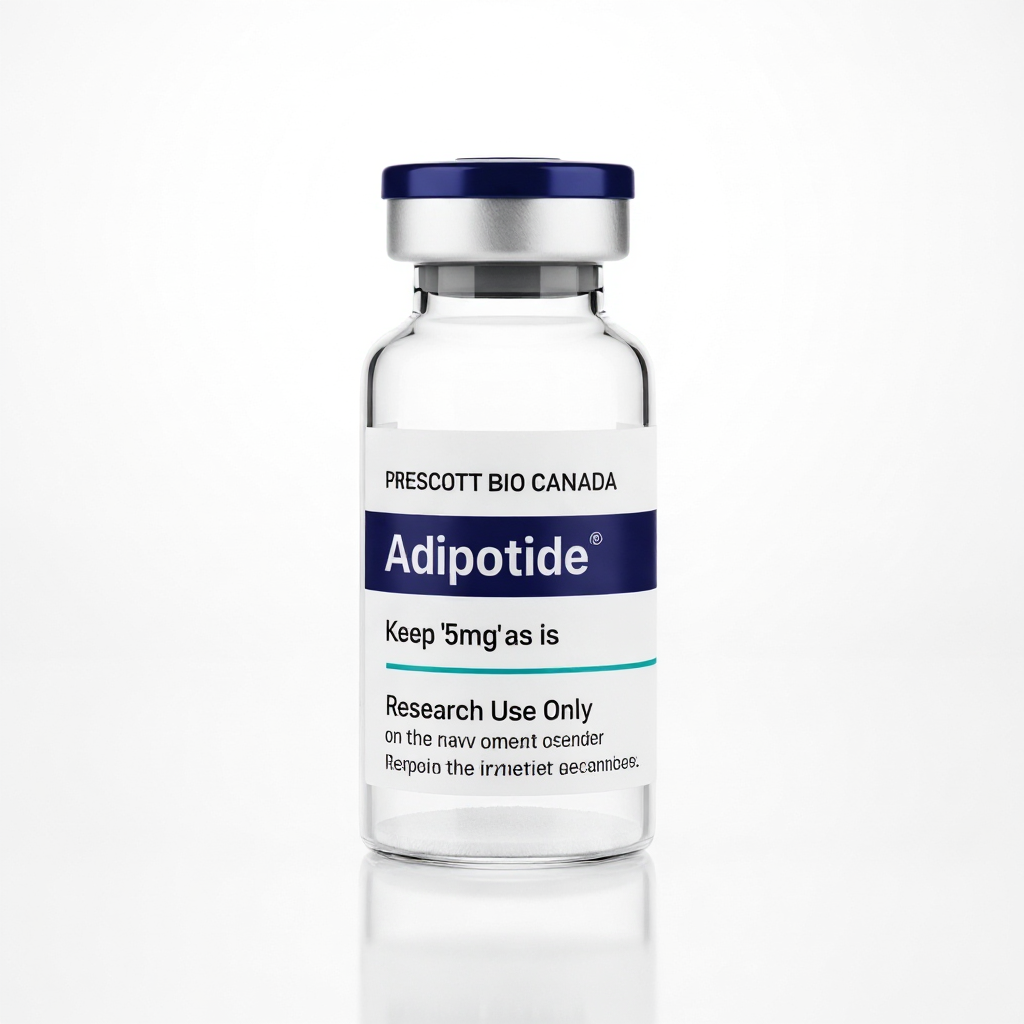
Description
Chemical Identity
Adipotide analytical reference compound. Molecular weight 2460 Da. Also known as: FTPP, Fat-Targeted Proapoptotic Peptide, Prohibitin-Targeting Peptide 1. Research status: Preclinical.
Research Overview
Adipotide (FTPP) is an experimental peptidomimetic compound designed to induce targeted apoptosis in the blood vessels supplying white adipose tissue. It consists of a vascular homing domain (CKGGRAKDC) fused to a proapoptotic sequence D(KLAKLAK)2, and has demonstrated significant fat reduction in both mouse and primate models.
Adipotide operates through a two-component mechanism that combines vascular targeting with programmed cell death induction.
The first component is the cyclic peptide motif CKGGRAKDC, identified through in vivo phage display screening. This peptide selectively binds to prohibitin, a receptor expressed on the surface of endothelial cells in white adipose tissue vasculature. The CKGGRAKDC motif also shows affinity for the ANXA2 (Annexin A2)-prohibitin receptor complex, which is preferentially expressed on the blood vessels feeding white fat depots.
Key published studies on Adipotide include: “Rapid and weight-independent improvement of glucose tolerance induced by a peptide designed to elicit apoptosis in adipose tissue endothelium” (Diabetes, 2012); “A peptidomimetic targeting white fat causes weight loss and improved insulin resistance in obese monkeys” (Science Translational Medicine, 2011); “Peptide designed to elicit apoptosis in adipose tissue endothelium reduces food intake and body weight” (Diabetes, 2010). These findings should be interpreted within the context of the experimental models and conditions described in each publication.
Research Context
Adipotide, also known as FTPP (Fat-Targeted Proapoptotic Peptide) or Prohibitin-Targeting Peptide 1, is an experimental peptidomimetic compound developed to combat obesity through a novel vascular-targeting mechanism. Unlike traditional weight loss compounds that act on appetite or metabolism systemically, adipotide was designed to selectively destroy the blood vessels that supply white adipose tissue, causing targeted fat cell death through ischemia and apoptosis.
The compound was originally developed by a research team led by Dr. Wadih Arap and Dr. Renata Pasqualini at the University of Texas M.D. Anderson Cancer Center, with the foundational discovery published in Nature Medicine in 2004. The approach emerged from the broader field of vascular-targeted therapy, previously explored in oncology for tumor vasculature destruction.
The second component is D(KLAKLAK)2, an amphipathic D-enantiomer peptide that disrupts mitochondrial membranes upon cellular internalization. Once the homing domain delivers the compound to adipose vasculature endothelial cells and receptor-mediated endocytosis occurs, the proapoptotic domain triggers mitochondrial membrane depolarization and initiates programmed cell death.
Specifications
| Sequence | CKGGRAKDC-GG-D(KLAKLAK)2 |
| Molecular Weight | 2460 Da |
| Molecular Formula | C105H195N33O26S2 |
| Purity | >=98% (HPLC) |
| Appearance | White to off-white lyophilized powder |
| Format | Lyophilized powder, sterile filtered |
| Solubility | Soluble in bacteriostatic water, sterile water, or normal saline |
| Storage | Store at -20°C (lyophilized). Reconstituted: 2-8°C, use within 30 days |
| Shipping | Ambient temperature (stable in lyophilized form) |
Each lot is accompanied by a Certificate of Analysis (COA) documenting purity, identity, and endotoxin testing results.
Research Applications
Adipotide reference compound has been documented in the published scientific literature across the following in vitro and preclinical research areas:
- Vascular Homing Domain
- Proapoptotic Domain
- Downstream Effects
- Mouse Studies
- Primate Studies
- Safety Observations
Researchers are advised to consult the primary literature for detailed experimental protocols, concentrations, and conditions relevant to their specific area of investigation involving Adipotide.
Storage and Handling
Adipotide is supplied as a lyophilized powder and should be stored at -20°C upon receipt for long-term stability. Protect from light, moisture, and repeated temperature fluctuations. Allow the sealed vial to equilibrate to room temperature before opening to prevent condensation and moisture absorption.
For reconstitution, add sterile water or an appropriate buffer slowly along the vial wall to avoid foaming. Gently swirl to dissolve — do not vortex. Reconstituted Adipotide solutions should be stored at 2-8°C and used within 30 days. Aliquoting is recommended to minimize freeze-thaw cycles. Consult the Safety Data Sheet (SDS) for detailed handling and disposal guidance.
For laboratory research use only (in vitro). Not for human or animal use. Not for diagnostic, therapeutic, or clinical purposes. Adipotide is supplied as an analytical reference compound for use by qualified research personnel at accredited institutions. Prescott Bio Canada does not provide guidance on administration, dosing, or use in living organisms.