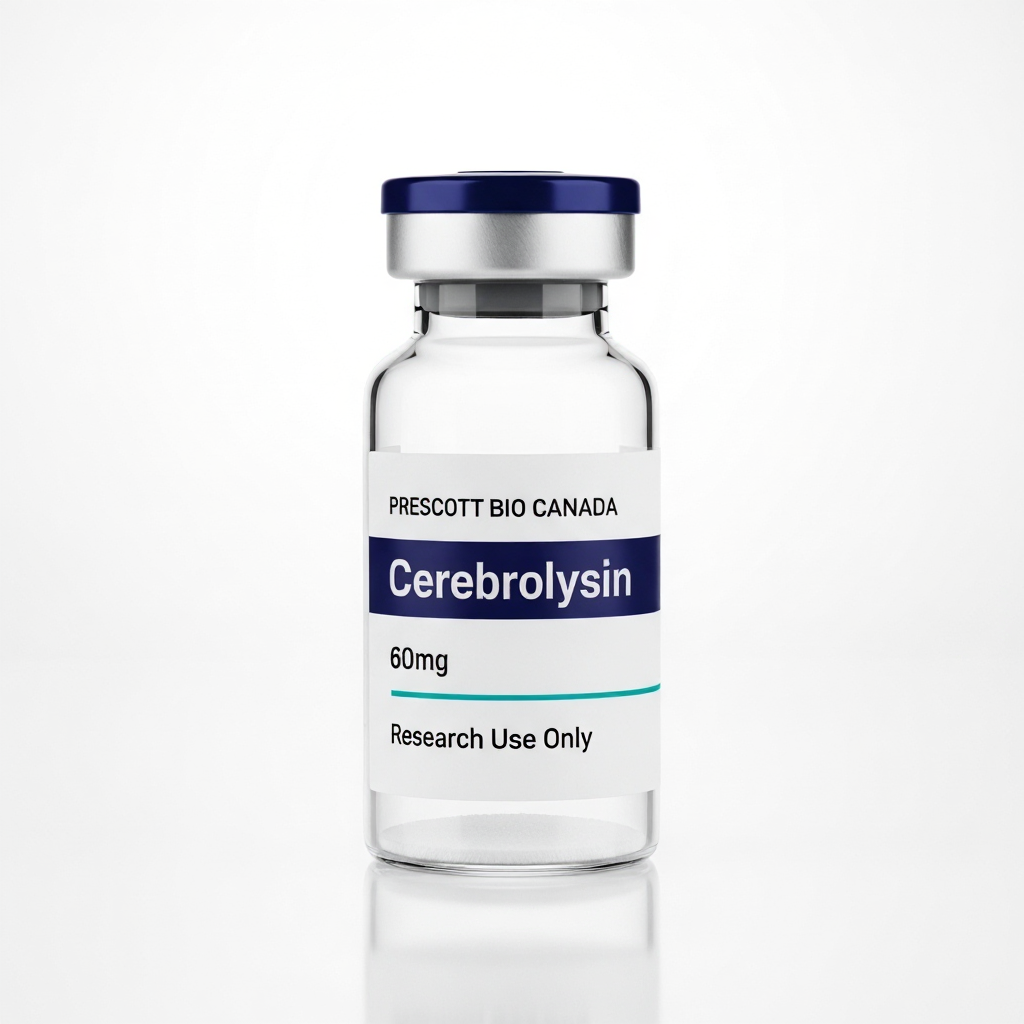
Description
Chemical Identity
Cerebrolysin analytical reference compound. Molecular weight 10000 Da. Also known as: FPF 1070, Cerebrolysin N. Research status: Approved.
Research Overview
Cerebrolysin is a multi-peptide preparation derived from porcine brain proteins, consisting of low-molecular-weight neuropeptides and free amino acids. It is approved in over 40 countries (excluding the US) for the treatment of stroke, traumatic brain injury, and Alzheimer’s disease dementia.
The central mechanism attributed to Cerebrolysin is its ability to mimic the activity of endogenous neurotrophic factors. Preclinical research has demonstrated that the peptide components of Cerebrolysin produce biological effects similar to those of brain-derived neurotrophic factor (BDNF), nerve growth factor (NGF), glial cell line-derived neurotrophic factor (GDNF), and ciliary neurotrophic factor (CNTF).
This neurotrophic factor-like activity is thought to occur through activation of intracellular signaling cascades shared by these endogenous growth factors, including the PI3K/Akt and MAPK/ERK pathways. Activation of PI3K/Akt promotes neuronal survival by phosphorylating and inactivating pro-apoptotic factors, while MAPK/ERK signaling supports neuronal differentiation and synaptic plasticity.
The Cerebrolysin Acute Stroke Treatment in Asia (CASTA) trial was a large randomized, double-blind, placebo-controlled study involving 1,070 patients with acute ischemic stroke conducted across multiple centers in Asia. Patients received Cerebrolysin (30 mL/day) or placebo intravenously for 10 days, beginning within 12 hours of stroke onset. The primary endpoint was the NIH Stroke Scale (NIHSS) score at day 90.
Key published studies on Cerebrolysin include: “Cerebrolysin for Acute Ischaemic Stroke (Cochrane Review)” (Cochrane Database of Systematic Reviews, 2020); “Cerebrolysin and Recovery After Stroke (CARS): A Randomized, Double-Blind, Placebo-Controlled Trial” (Stroke, 2016); “Cerebrolysin as Acute Post-Traumatic Adjunctive Intervention (CAPTAIN Trial)” (Journal of Neurotrauma, 2013). These findings should be interpreted within the context of the experimental models and conditions described in each publication.
Research Context
Cerebrolysin is a unique neurotrophic preparation produced by standardized enzymatic proteolysis of purified porcine brain proteins. Unlike most peptide therapeutics that consist of a single defined molecular entity, Cerebrolysin is a complex mixture containing approximately 25% low-molecular-weight biologically active neuropeptides (with molecular masses below 10 kDa) and approximately 75% free amino acids. The peptide fraction is considered the pharmacologically active component responsible for the neurotrophic and neuroprotective effects observed in both preclinical and clinical studies.
The preparation was originally developed by the Austrian pharmaceutical company EBEWE Pharma (now part of Ever Neuro Pharma) and has been in clinical use since the 1970s. It is currently approved in more than 40 countries across Europe, Asia, and Latin America for the treatment of acute ischemic stroke, traumatic brain injury, and dementia of the Alzheimer’s type. Notably, Cerebrolysin has not received regulatory approval from the US Food and Drug Administration (FDA), though clinical trials have been conducted in the United States.
Because Cerebrolysin is derived from biological tissue through enzymatic breakdown rather than being a single synthesized peptide, it does not have a defined amino acid sequence, molecular weight, or molecular formula. Its standardization relies on manufacturing process controls and biological activity assays rather than structural characterization of a single active ingredient.
Specifications
| Sequence | Complex neuropeptide mixture derived from porcine brain proteins |
| Molecular Weight | 10000 Da |
| CAS Number | 12656-61-0 |
| Purity | >=98% (HPLC) |
| Appearance | White to off-white lyophilized powder |
| Format | Lyophilized powder, sterile filtered |
| Solubility | Soluble in bacteriostatic water, sterile water, or normal saline |
| Storage | Store at -20°C (lyophilized). Reconstituted: 2-8°C, use within 30 days |
| Shipping | Ambient temperature (stable in lyophilized form) |
Each lot is accompanied by a Certificate of Analysis (COA) documenting purity, identity, and endotoxin testing results.
Research Applications
Cerebrolysin reference compound has been documented in the published scientific literature across the following in vitro and preclinical research areas:
- Neurotrophic Factor Mimicry
- Neuroprotection
- Neuroplasticity and Neurogenesis
- Effects on Amyloid Pathology
- Stroke Trials (CASTA and CARS)
- Alzheimer’s Disease Trials
- Traumatic Brain Injury
- Administration and Dosing
Researchers are advised to consult the primary literature for detailed experimental protocols, concentrations, and conditions relevant to their specific area of investigation involving Cerebrolysin.
Storage and Handling
Cerebrolysin is supplied as a lyophilized powder and should be stored at -20°C upon receipt for long-term stability. Protect from light, moisture, and repeated temperature fluctuations. Allow the sealed vial to equilibrate to room temperature before opening to prevent condensation and moisture absorption.
For reconstitution, add sterile water or an appropriate buffer slowly along the vial wall to avoid foaming. Gently swirl to dissolve — do not vortex. Reconstituted Cerebrolysin solutions should be stored at 2-8°C and used within 30 days. Aliquoting is recommended to minimize freeze-thaw cycles. Consult the Safety Data Sheet (SDS) for detailed handling and disposal guidance.
For laboratory research use only (in vitro). Not for human or animal use. Not for diagnostic, therapeutic, or clinical purposes. Cerebrolysin is supplied as an analytical reference compound for use by qualified research personnel at accredited institutions. Prescott Bio Canada does not provide guidance on administration, dosing, or use in living organisms.