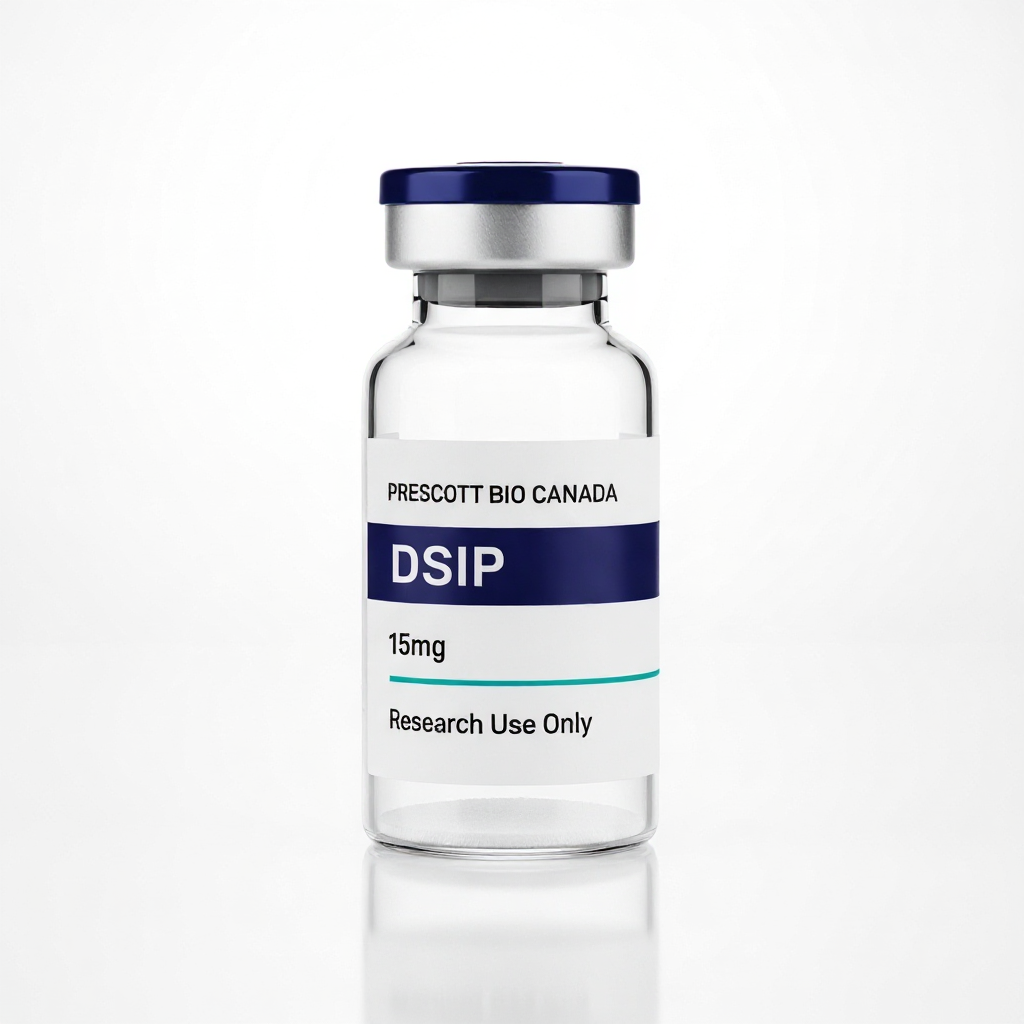
Description
Chemical Identity
DSIP analytical reference compound. Molecular weight 849 Da. Also known as: Delta Sleep-Inducing Peptide, Delta-Sleep-Inducing Peptide, DSIP Nonapeptide. Research status: Preclinical.
Research Overview
DSIP (Delta Sleep-Inducing Peptide) is a naturally occurring nonapeptide first isolated from rabbit cerebral venous blood in 1977. It is an amphiphilic peptide with a molecular weight of approximately 849 Da that has been studied for its effects on sleep architecture, stress modulation, pain perception, and neuroendocrine regulation.
The mechanism of action of DSIP remains incompletely understood, which has been described as “a still unresolved riddle” in the scientific literature. Unlike many neuroactive peptides, DSIP does not appear to act through a single identified receptor. Instead, its effects appear to be mediated through multiple pathways.
DSIP has been demonstrated to promote delta-wave sleep in rabbits, mice, rats, cats, and humans. The peptide increases the proportion of slow-wave sleep characterized by high-amplitude delta rhythms on electroencephalography (EEG). In human studies, DSIP administration has been associated with increased sleep efficiency, shortened sleep latency, and normalization of disturbed sleep patterns. The sleep-promoting effects appear to involve modulation of serotonergic and GABAergic neurotransmission.
The primary clinical interest in DSIP has been its potential for treating insomnia and other sleep disorders. Several small clinical studies have evaluated DSIP in patients with chronic insomnia, with variable results. Some studies reported normalization of sleep architecture and improved subjective sleep quality, while others found limited therapeutic benefit compared to placebo.
Key published studies on DSIP include: “Delta sleep-inducing peptide (DSIP): a still unresolved riddle” (Journal of Neurochemistry, 2006); “A clinical trial with DSIP” (European Neurology, 1984); “Effects of delta sleep-inducing peptide on sleep of chronic insomniac patients. A double-blind study” (Neuropsychobiology, 1983). These findings should be interpreted within the context of the experimental models and conditions described in each publication.
Research Context
DSIP (Delta Sleep-Inducing Peptide) is a naturally occurring nonapeptide that was first isolated from the cerebral venous blood of rabbits in 1977 by the Schoenenberger-Monnier research group in Basel, Switzerland. The peptide has the amino acid sequence Trp-Ala-Gly-Gly-Asp-Ala-Ser-Gly-Glu with a molecular weight of approximately 849 Da. It was named for its ability to induce delta-wave (slow-wave) sleep when infused into the cerebral ventricles of recipient rabbits.
DSIP is normally synthesized in the hypothalamus and is present in minute amounts in the blood. Brain and plasma DSIP concentrations exhibit a marked diurnal variation, with concentrations being lower in the mornings and higher in the afternoons, suggesting a role in circadian rhythm regulation. The peptide has been found in numerous mammalian tissues and in the blood of various species including humans.
DSIP modulates the release of several hormones including luteinizing hormone (LH), growth hormone (GH), and adrenocorticotropic hormone (ACTH). These neuroendocrine effects suggest that DSIP acts at the hypothalamic level to influence pituitary hormone secretion. DSIP has been shown to suppress the stress-induced rise in cortisol and ACTH, suggesting an anti-stress or adaptogenic function.
Specifications
| Sequence | Trp-Ala-Gly-Gly-Asp-Ala-Ser-Gly-Glu |
| Molecular Weight | 849 Da |
| Molecular Formula | C35H48N10O15 |
| CAS Number | 62568-57-4 |
| Purity | >=98% (HPLC) |
| Appearance | White to off-white lyophilized powder |
| Format | Lyophilized powder, sterile filtered |
| Solubility | Soluble in bacteriostatic water, sterile water, or normal saline |
| Storage | Store at -20°C (lyophilized). Reconstituted: 2-8°C, use within 30 days |
| Shipping | Ambient temperature (stable in lyophilized form) |
Each lot is accompanied by a Certificate of Analysis (COA) documenting purity, identity, and endotoxin testing results.
Research Applications
DSIP reference compound has been documented in the published scientific literature across the following in vitro and preclinical research areas:
- Sleep Modulation
- Neuroendocrine Effects
- Analgesic and Anticonvulsant Properties
- Antioxidant and Cytoprotective Effects
- Insomnia and Sleep Disorders
- Stress and Adaptation
- Substance Withdrawal
Researchers are advised to consult the primary literature for detailed experimental protocols, concentrations, and conditions relevant to their specific area of investigation involving DSIP.
Storage and Handling
DSIP is supplied as a lyophilized powder and should be stored at -20°C upon receipt for long-term stability. Protect from light, moisture, and repeated temperature fluctuations. Allow the sealed vial to equilibrate to room temperature before opening to prevent condensation and moisture absorption.
For reconstitution, add sterile water or an appropriate buffer slowly along the vial wall to avoid foaming. Gently swirl to dissolve — do not vortex. Reconstituted DSIP solutions should be stored at 2-8°C and used within 30 days. Aliquoting is recommended to minimize freeze-thaw cycles. Consult the Safety Data Sheet (SDS) for detailed handling and disposal guidance.
For laboratory research use only (in vitro). Not for human or animal use. Not for diagnostic, therapeutic, or clinical purposes. DSIP is supplied as an analytical reference compound for use by qualified research personnel at accredited institutions. Prescott Bio Canada does not provide guidance on administration, dosing, or use in living organisms.