Description
Chemical Identity
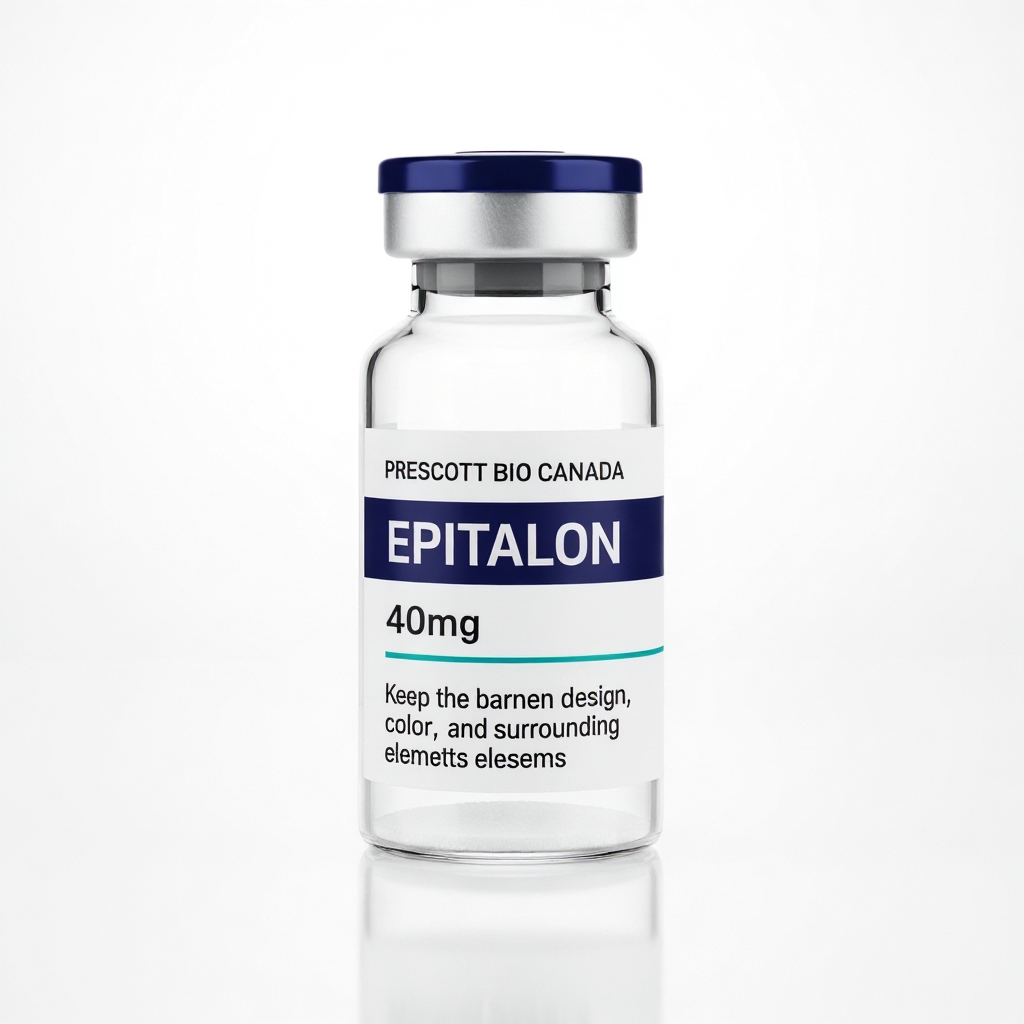
Epitalon analytical reference compound. Molecular weight 390.3 Da. Also known as: Epithalon, Epithalone, AGAG peptide. Research status: Preclinical.
Research Overview
Epitalon is a synthetic tetrapeptide (Ala-Glu-Asp-Gly) developed as an analog of the pineal gland peptide Epithalamin. It is reported to activate telomerase (hTERT) in human somatic cells and has been studied for anti-aging and lifespan-extending properties, though most evidence originates from a single research group.
The most studied molecular activity of Epitalon is its reported capacity to activate telomerase expression in human somatic cells, which normally maintain telomerase in a transcriptionally repressed state. In a key publication by Khavinson et al. in the Bulletin of Experimental Biology and Medicine, Epitalon treatment of human fetal lung fibroblast cultures was reported to reactivate hTERT expression and increase telomerase activity as measured by the telomeric repeat amplification protocol (TRAP) assay.
The proposed mechanism involves epigenetic regulation of the hTERT promoter. Khavinson’s group has suggested that Epitalon interacts with specific DNA sequences in the promoter region of the hTERT gene, potentially through direct peptide-DNA binding or through modulation of transcription factor binding. Studies from this group have reported that Epitalon can alter chromatin structure in the vicinity of the hTERT gene, promoting a more transcriptionally permissive state. The specific transcription factors and signaling pathways mediating this effect have not been definitively characterized by independent research groups.
The most striking claims for Epitalon derive from lifespan studies in laboratory animals conducted by the Khavinson group. In studies using rodent models (rats and mice), chronic Epitalon administration was reported to extend mean lifespan by 12 to 25 percent compared to untreated controls. In one widely cited study, aged female rats treated with Epitalon showed a reported 13.3% increase in mean lifespan. In studies of transgenic mice bearing the HER-2/neu oncogene (a model of spontaneous mammary carcinogenesis), Epitalon treatment reportedly reduced tumor incidence and extended lifespan.
Key published studies on Epitalon include: “Peptide promotes overcoming of the division limit in human somatic cells” (Bulletin of Experimental Biology and Medicine, 2003); “Effect of Epitalon on the lifespan of aged female rats” (Bulletin of Experimental Biology and Medicine, 2003); “Epitalon and breast carcinogenesis in HER-2/neu transgenic mice” (International Journal of Cancer, 2002). These findings should be interpreted within the context of the experimental models and conditions described in each publication.
Research Context
Epitalon (also spelled Epithalon or Epithalone) is a synthetic tetrapeptide consisting of four amino acids — alanine, glutamic acid, aspartic acid, and glycine (Ala-Glu-Asp-Gly) — with a molecular weight of 390.3 Da and the molecular formula C14H22N4O9. Its CAS registry number is 307297-39-8. Epitalon was developed by Professor Vladimir Khavinson and colleagues at the St. Petersburg Institute of Bioregulation and Gerontology (now part of the Pavlov Institute) in Russia as a synthetic version of a peptide fraction originally isolated from bovine pineal gland tissue, known as Epithalamin.
The development of Epitalon is rooted in Khavinson’s broader theory of bioregulatory peptides, which proposes that short peptides (2-4 amino acids) derived from various organs can act as gene regulators to restore age-related functional decline in those specific organ systems. According to this framework, Epithalamin (and by extension its synthetic analog Epitalon) represents the bioregulatory peptide of the pineal gland, and its administration is proposed to restore pineal gland function, melatonin synthesis, and neuroendocrine homeostasis.
The primary mechanism of interest attributed to Epitalon is the activation of telomerase, specifically the catalytic subunit human telomerase reverse transcriptase (hTERT), in human somatic cells. Telomerase is the enzyme responsible for maintaining and elongating telomeres, the repetitive DNA sequences that cap chromosome ends and shorten progressively with each cell division. Telomere shortening is a well-established hallmark of cellular aging, and the reactivation of telomerase in somatic cells has been proposed as a potential anti-aging strategy. Epitalon has also been referred to colloquially as the “AGAG peptide” based on the single-letter amino acid codes of its sequence.
Specifications
| Sequence | Ala-Glu-Asp-Gly |
| Molecular Weight | 390.3 Da |
| Molecular Formula | C14H22N4O9 |
| CAS Number | 307297-39-8 |
| Purity | >=98% (HPLC) |
| Appearance | White to off-white lyophilized powder |
| Format | Lyophilized powder, sterile filtered |
| Solubility | Soluble in bacteriostatic water, sterile water, or normal saline |
| Storage | Store at -20°C (lyophilized). Reconstituted: 2-8°C, use within 30 days |
| Shipping | Ambient temperature (stable in lyophilized form) |
Each lot is accompanied by a Certificate of Analysis (COA) documenting purity, identity, and endotoxin testing results.
Research Applications
Epitalon reference compound has been documented in the published scientific literature across the following in vitro and preclinical research areas:
- Telomerase Activation and hTERT Expression
- Pineal Gland Regulation and Melatonin
- Khavinson Bioregulator Theory
- Animal Lifespan Studies
- Epithalamin Versus Epitalon
- Telomere Biology Research
- Neuroendocrine and Antioxidant Effects
- Concentration of Evidence in a Single Research Group
Researchers are advised to consult the primary literature for detailed experimental protocols, concentrations, and conditions relevant to their specific area of investigation involving Epitalon.
Storage and Handling
Epitalon is supplied as a lyophilized powder and should be stored at -20°C upon receipt for long-term stability. Protect from light, moisture, and repeated temperature fluctuations. Allow the sealed vial to equilibrate to room temperature before opening to prevent condensation and moisture absorption.
For reconstitution, add sterile water or an appropriate buffer slowly along the vial wall to avoid foaming. Gently swirl to dissolve — do not vortex. Reconstituted Epitalon solutions should be stored at 2-8°C and used within 30 days. Aliquoting is recommended to minimize freeze-thaw cycles. Consult the Safety Data Sheet (SDS) for detailed handling and disposal guidance.
For laboratory research use only (in vitro). Not for human or animal use. Not for diagnostic, therapeutic, or clinical purposes. Epitalon is supplied as an analytical reference compound for use by qualified research personnel at accredited institutions. Prescott Bio Canada does not provide guidance on administration, dosing, or use in living organisms.