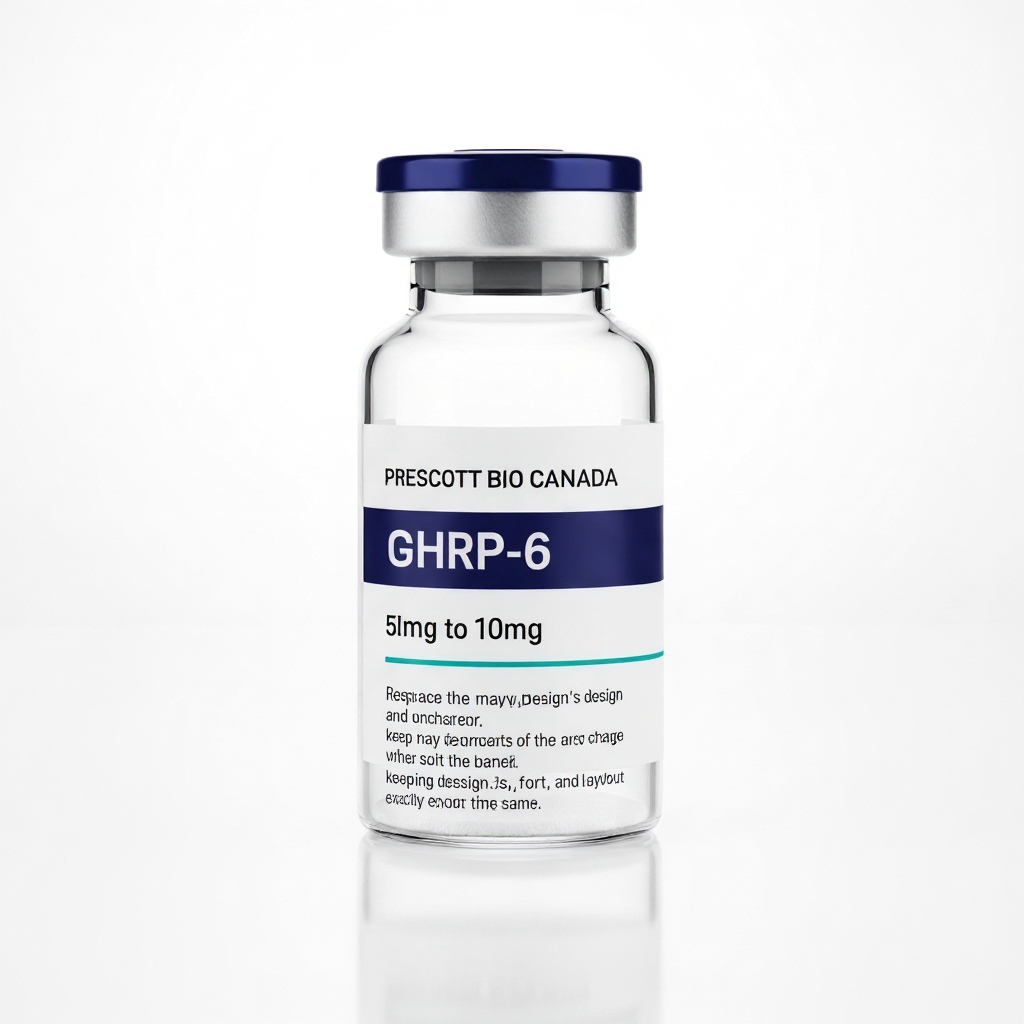
Description
Chemical Identity
GHRP-6 (Growth Hormone Releasing Peptide-6) is a synthetic hexapeptide growth hormone secretagogue with the molecular formula C46H56N12O6 and a molecular weight of 873.01 Da (CAS number 87616-84-0). The amino acid sequence is His-D-Trp-Ala-Trp-D-Phe-Lys-NH2, incorporating D-configuration amino acids for enhanced metabolic stability. Developed in the late 1980s by Cyril Bowers and colleagues, GHRP-6 was among the first growth hormone secretagogues to be characterized and has served as a foundational research tool for understanding ghrelin receptor biology.
GHRP-6 played a pivotal role in the discovery and pharmacological characterization of the growth hormone secretagogue receptor (GHS-R1a), which was later identified as the receptor for the endogenous hormone ghrelin.
| Property | Value |
|---|---|
| Molecular Formula | C46H56N12O6 |
| Molecular Weight | 873.01 Da |
| CAS Number | 87616-84-0 |
| Sequence | His-D-Trp-Ala-Trp-D-Phe-Lys-NH2 |
| Research Status | Preclinical |
Research Overview
GHRP-6 has been extensively studied as a pharmacological tool for investigating growth hormone secretion, ghrelin receptor signaling, and cytoprotective mechanisms. The primary mechanism involves activation of the GHS-R1a receptor on anterior pituitary somatotrophs, triggering phospholipase C activation, IP3-mediated calcium release, and GH exocytosis. GHRP-6 also acts at the hypothalamic level to stimulate GHRH release and suppress somatostatin, amplifying the GH response.
Unlike GHRP-2, GHRP-6 produces a somewhat broader hormonal response that includes more notable stimulation of cortisol, prolactin, and appetite (through its ghrelin-mimetic properties), which has both research utility and pharmacological significance.
Key areas of published research include:
- GH Axis Diagnostic Testing: GHRP-6 stimulation testing is used in research to distinguish between hypothalamic and pituitary causes of GH deficiency. Combined GHRP-6 plus GHRH testing provides a highly sensitive assessment of GH secretory capacity, as the synergistic response through complementary receptor pathways reveals the functional integrity of both hypothalamic and pituitary components.
- Cytoprotective and Cardioprotective Effects: A study published in Clinical Science (2007) demonstrated that GHRP-6 prevents oxidant cytotoxicity and reduces myocardial necrosis in a model of acute myocardial infarction. These cytoprotective effects appear to be mediated through mechanisms independent of GH release.
- GH Secretion in Aging: Research published in Clinical Endocrinology (1995) demonstrated that GH secretion following GHRP-6 or GHRH combined with GHRP-6 does not decline in late adulthood, suggesting preserved responsiveness of the GH axis to secretagogue stimulation across the lifespan.
GHRP-6 is not approved for therapeutic use in any jurisdiction. It remains an important preclinical research tool.
Specifications
All GHRP-6 supplied by Prescott Bio Canada is manufactured to research-grade standards.
| Specification | Detail |
|---|---|
| Purity | >98% (HPLC) |
| Form | Lyophilized powder |
| Appearance | White to off-white powder |
| Storage (lyophilized) | -20°C, protected from light |
| Storage (reconstituted) | 2-8°C, use within 30 days |
| Solubility | Soluble in bacteriostatic water, sterile water, or normal saline |
Each vial is accompanied by a Certificate of Analysis (COA) documenting purity, identity, and endotoxin testing.
Research Applications
GHRP-6 is supplied exclusively for in vitro and in vivo laboratory research. Published experimental applications include:
- Growth hormone secretagogue receptor (GHS-R1a) pharmacology and signaling studies
- GH deficiency diagnostic test development and pituitary function assessment
- Cytoprotective and cardioprotective mechanism research
- Combination studies with GHRH analogs examining synergistic GH release
- Appetite regulation and ghrelin pathway research
- Age-related GH decline and neuroendocrine aging studies
Researchers should consult the primary literature and institutional review protocols before designing experiments with GHRP-6.
Storage and Handling
Lyophilized powder: Store at -20°C in the original sealed vial, protected from light and moisture. Under these conditions, GHRP-6 maintains stability for up to 24 months.
Reconstituted solution: Reconstitute with bacteriostatic water or sterile water to the desired concentration. Store reconstituted GHRP-6 at 2-8°C and use within 30 days. Avoid repeated freeze-thaw cycles.
Handling precautions: This product is intended for research use only (RUO). Not for human or veterinary diagnostic or therapeutic use. Handle using standard laboratory safety practices including appropriate PPE.