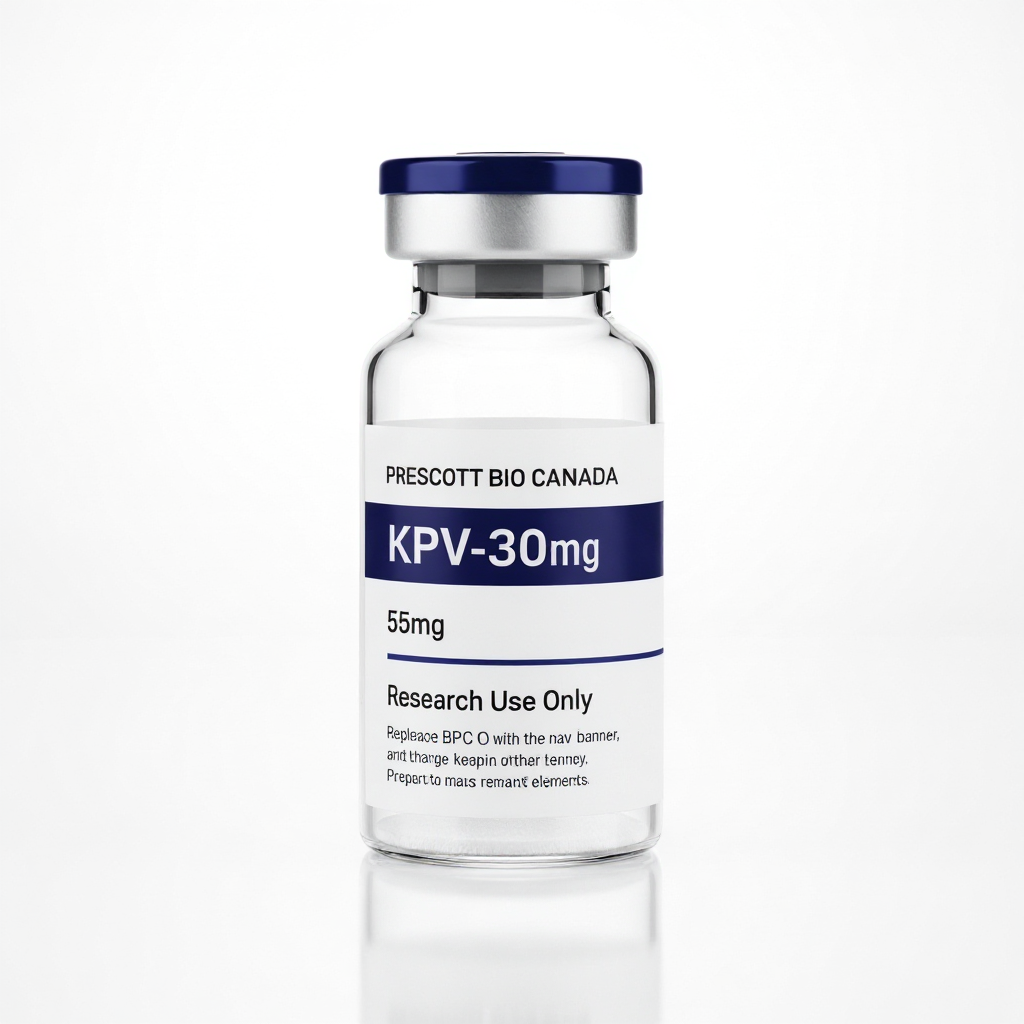
Description
Chemical Identity
KPV is a naturally occurring anti-inflammatory tripeptide with the amino acid sequence Lys-Pro-Val, a molecular formula of C16H30N4O4, and a molecular weight of 342.4 Da (CAS number 67727-97-3). KPV is derived from the C-terminal end of alpha-melanocyte-stimulating hormone (alpha-MSH) and retains the parent molecule’s anti-inflammatory activity while operating through melanocortin receptor-independent mechanisms.
KPV is also referred to as the Alpha-MSH C-terminal tripeptide or KPV tripeptide. Its small size and demonstrated transport via the intestinal PepT1 peptide transporter make it a compound of particular interest in gastrointestinal inflammation research.
| Property | Value |
|---|---|
| Molecular Formula | C16H30N4O4 |
| Molecular Weight | 342.4 Da |
| CAS Number | 67727-97-3 |
| Sequence | Lys-Pro-Val |
| Research Status | Preclinical |
Research Overview
KPV has been investigated in preclinical research focusing on anti-inflammatory signaling, inflammatory bowel disease models, and NF-kB pathway modulation. The central mechanism involves inhibition of the nuclear factor kappa-B (NF-kB) signaling pathway, the master transcriptional regulator of inflammatory gene expression. KPV inhibits the activation of the IKK complex, preventing phosphorylation and degradation of IkB-alpha and keeping NF-kB sequestered in the cytoplasm.
Critically, KPV exerts these anti-inflammatory effects independently of melanocortin receptors (MC1R-MC5R), distinguishing it from the full-length alpha-MSH peptide. The compound is transported into intestinal epithelial cells via the PepT1 (SLC15A1) transporter, enabling intracellular delivery in the gastrointestinal mucosa.
Key areas of published research include:
- Inflammatory Bowel Disease: Preclinical studies in colitis models have demonstrated that KPV reduces intestinal inflammation through NF-kB inhibition in epithelial cells. The PepT1-mediated transport mechanism enables direct uptake by intestinal epithelium, supporting topical gastrointestinal applications.
- NF-kB Pathway Modulation: Research has characterized KPV’s inhibition of the IKK-IkB-NF-kB cascade, demonstrating reduced expression of pro-inflammatory cytokines (TNF-alpha, IL-1beta, IL-6), chemokines, and adhesion molecules in multiple cell types.
- Anti-Inflammatory Signaling: KPV has shown anti-inflammatory activity across diverse cell types and inflammation models, with effects comparable to full-length alpha-MSH despite lacking melanocortin receptor binding.
KPV remains a preclinical research compound with no regulatory approvals.
Specifications
All KPV supplied by Prescott Bio Canada is manufactured to research-grade standards.
| Specification | Detail |
|---|---|
| Purity | >98% (HPLC) |
| Form | Lyophilized powder |
| Appearance | White to off-white powder |
| Storage (lyophilized) | -20°C, protected from light |
| Storage (reconstituted) | 2-8°C, use within 30 days |
| Solubility | Soluble in bacteriostatic water, sterile water, or normal saline |
Each vial is accompanied by a Certificate of Analysis (COA) documenting purity, identity, and endotoxin testing.
Research Applications
KPV is supplied exclusively for in vitro and in vivo laboratory research. Published experimental applications include:
- NF-kB signaling pathway inhibition and anti-inflammatory mechanism research
- Inflammatory bowel disease and colitis model studies
- PepT1 transporter biology and intestinal peptide uptake research
- Cytokine modulation and immune regulation studies
- Comparative studies with alpha-MSH and melanocortin receptor agonists
Researchers should consult the primary literature and institutional review protocols before designing experiments with KPV.
Storage and Handling
Lyophilized powder: Store at -20°C in the original sealed vial, protected from light and moisture. Under these conditions, KPV maintains stability for up to 24 months.
Reconstituted solution: Reconstitute with bacteriostatic water or sterile water to the desired concentration. Store reconstituted KPV at 2-8°C and use within 30 days. Avoid repeated freeze-thaw cycles.
Handling precautions: This product is intended for research use only (RUO). Not for human or veterinary diagnostic or therapeutic use. Handle using standard laboratory safety practices including appropriate PPE.