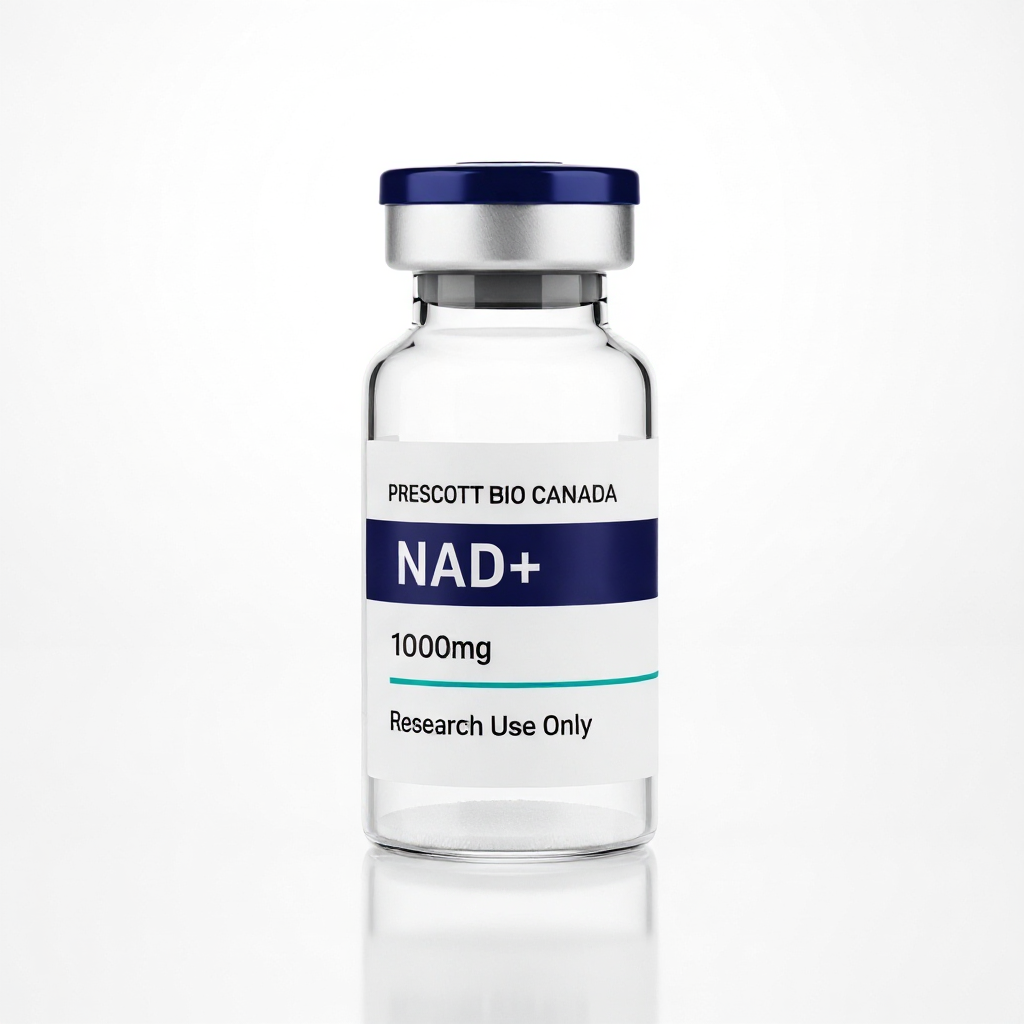
Description
Chemical Identity
NAD+ (Nicotinamide Adenine Dinucleotide) analytical reference compound. Molecular weight 663.43 Da. Also known as: NAD+, Nicotinamide Adenine Dinucleotide, NAD. Research status: Phase2.
Research Overview
NAD+ (nicotinamide adenine dinucleotide) is a critical coenzyme found in every living cell, essential for mitochondrial energy production, DNA repair, and cellular signaling. NAD+ levels decline significantly with age, and this decline is implicated in metabolic dysfunction, neurodegeneration, and accelerated aging. Research into NAD+ replenishment through direct supplementation and precursors (NMN, NR) is an active area of clinical investigation for age-related diseases.
Overview NAD+ functions through two fundamentally different biochemical roles: (1) as a coenzyme in redox reactions, where it shuttles electrons without being consumed, and (2) as a substrate for NAD+-consuming enzymes, where it is cleaved and depleted. The balance between NAD+ synthesis, consumption, and recycling determines cellular NAD+ availability and, consequently, the activity of NAD+-dependent signaling pathways.
Redox chemistry and energy metabolism Glycolysis and TCA cycle: NAD+ accepts hydride ions (H-) from metabolic intermediates, generating NADH. Each glucose molecule produces NADH at multiple steps (glyceraldehyde-3-phosphate dehydrogenase, pyruvate dehydrogenase, isocitrate dehydrogenase, alpha-ketoglutarate dehydrogenase, malate dehydrogenase). Electron transport chain: NADH donates electrons to Complex I (NADH dehydrogenase), initiating the proton gradient that drives ATP synthase. This process generates approximately 2.5 ATP per NADH molecule. Fatty acid oxidation: Beta-oxidation generates NADH at each cycle, linking lipid metabolism to NAD+ availability. NAD+/NADH ratio: The cytoplasmic NAD+/NADH ratio (~700:1 in well-oxygenated cells) serves as a metabolic sensor, influencing glycolytic flux, gluconeogenesis, and redox-sensitive signaling.
NAD+ replenishment is being investigated across multiple therapeutic areas, primarily through direct NAD+ administration (IV) and through oral precursors NMN and NR.
Key published studies on NAD+ (Nicotinamide Adenine Dinucleotide) include: “Effect of oral nicotinamide mononucleotide on clinical parameters and nicotinamide metabolite levels in healthy Japanese men” (Endocrine Journal, 2020); “Nicotinamide riboside augments the aged human skeletal muscle NAD+ metabolome and induces transcriptomic and anti-inflammatory signatures” (Cell Reports, 2019); “Chronic nicotinamide riboside supplementation is well-tolerated and elevates NAD+ in healthy middle-aged and older adults” (Nature Communications, 2018). These findings should be interpreted within the context of the experimental models and conditions described in each publication.
Research Context
NAD+ (nicotinamide adenine dinucleotide) is a coenzyme present in all living cells that serves as a central metabolic hub linking cellular energy production to signaling and repair processes. First discovered in 1906 by Arthur Harden and William John Young during fermentation studies, NAD+ has since been recognized as one of the most important molecules in biology.
NAD+ exists in two forms: the oxidized form (NAD+) and the reduced form (NADH). Together, this redox couple participates in over 500 enzymatic reactions, making it the most common cofactor in human metabolism. NAD+ accepts electrons during catabolic reactions (glycolysis, the TCA cycle, and fatty acid oxidation) and donates them as NADH to the mitochondrial electron transport chain for ATP synthesis.
Beyond its role as an electron carrier, NAD+ serves as a consumed substrate for three major classes of enzymes: sirtuins (SIRT1-7), poly-ADP-ribose polymerases (PARPs), and cyclic ADP-ribose synthases (CD38/CD157). These NAD+-consuming enzymes link cellular metabolic status to epigenetic regulation, DNA repair, calcium signaling, and immune function.
Specifications
| Molecular Weight | 663.43 Da |
| Molecular Formula | C21H27N7O14P2 |
| CAS Number | 53-84-9 |
| Purity | >=98% (HPLC) |
| Appearance | White to off-white lyophilized powder |
| Format | Lyophilized powder, sterile filtered |
| Solubility | Soluble in bacteriostatic water, sterile water, or normal saline |
| Storage | Store at -20°C (lyophilized). Reconstituted: 2-8°C, use within 30 days |
| Shipping | Ambient temperature (stable in lyophilized form) |
Each lot is accompanied by a Certificate of Analysis (COA) documenting purity, identity, and endotoxin testing results.
Research Applications
NAD+ (Nicotinamide Adenine Dinucleotide) reference compound has been documented in the published scientific literature across the following in vitro and preclinical research areas:
- Anti-aging and longevity research
- Neurodegenerative disease research (Alzheimer’s, Parkinson’s
- Metabolic health and mitochondrial dysfunction studies
- Cellular repair and DNA damage response research
- Addiction and substance use disorder clinical trials
Researchers are advised to consult the primary literature for detailed experimental protocols, concentrations, and conditions relevant to their specific area of investigation involving NAD+ (Nicotinamide Adenine Dinucleotide).
Storage and Handling
NAD+ (Nicotinamide Adenine Dinucleotide) is supplied as a lyophilized powder and should be stored at -20°C upon receipt for long-term stability. Protect from light, moisture, and repeated temperature fluctuations. Allow the sealed vial to equilibrate to room temperature before opening to prevent condensation and moisture absorption.
For reconstitution, add sterile water or an appropriate buffer slowly along the vial wall to avoid foaming. Gently swirl to dissolve — do not vortex. Reconstituted NAD+ (Nicotinamide Adenine Dinucleotide) solutions should be stored at 2-8°C and used within 30 days. Aliquoting is recommended to minimize freeze-thaw cycles. Consult the Safety Data Sheet (SDS) for detailed handling and disposal guidance.
For laboratory research use only (in vitro). Not for human or animal use. Not for diagnostic, therapeutic, or clinical purposes. NAD+ (Nicotinamide Adenine Dinucleotide) is supplied as an analytical reference compound for use by qualified research personnel at accredited institutions. Prescott Bio Canada does not provide guidance on administration, dosing, or use in living organisms.