Description
Chemical Identity
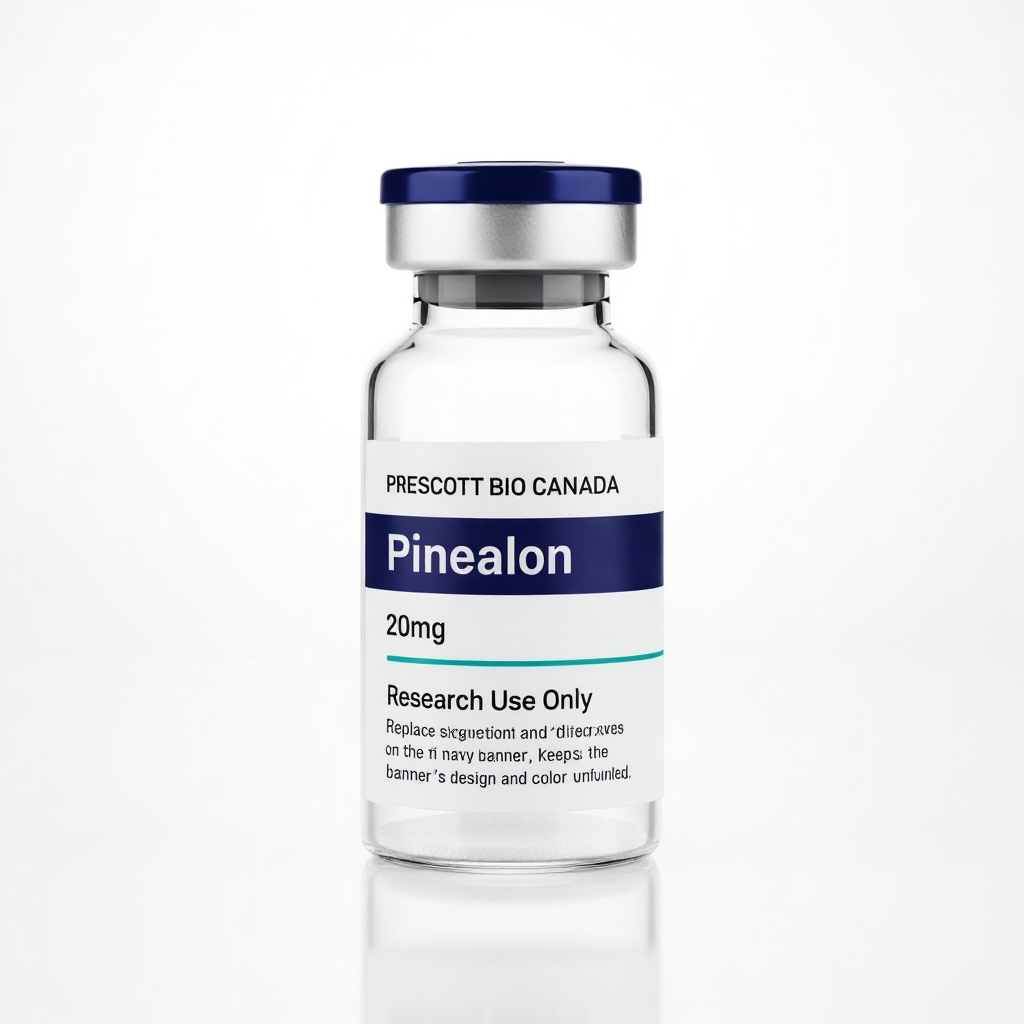
Pinealon analytical reference compound. Molecular weight 404.37 Da. Also known as: EDR Peptide, Glu-Asp-Arg. Research status: Preclinical.
Research Overview
Pinealon (EDR) is a synthetic tripeptide bioregulator composed of glutamic acid, aspartic acid, and arginine. Developed as part of Khavinson’s peptide bioregulation research, it is studied for neuroprotective properties and potential modulation of gene expression related to neuronal function and pineal gland activity.
Preclinical and published research on Pinealon has identified several areas of scientific interest: Studied for neuroprotective effects in cellular and animal models; Investigated for modulation of gene expression via epigenetic mechanisms; Short tripeptide sequence allows oral bioavailability in some models; Explored for potential circadian rhythm and pineal gland support.
Key published studies on Pinealon include: “Neuroprotective Effects of Tripeptides – Epigenetic Regulators in Mouse Model of Alzheimer’s Disease” (Pharmaceuticals, 2021); “Neuroprotective Effect of EDR Peptide in Mouse Model of Huntington’s Disease” (Journal of Neurology and Neuroscience, 2017); “Pinealon protects the rat offspring from prenatal hyperhomocysteinemia” (International Journal of Clinical and Experimental Medicine, 2012). These findings should be interpreted within the context of the experimental models and conditions described in each publication.
Research Context
Pinealon (EDR; Glu–Asp–Arg) is an ultrashort neuroprotective tripeptide whose mechanism of action is best described as an epigenetically oriented modulator of stress and survival pathways, with experimental support for antioxidant and anti-apoptotic effects and in silico/biophysical support for direct chromatin interactions. Below we synthesize the available evidence by mechanistic tier, indicating strength where possible.
Molecule identity and scope EDR is a tripeptide (Glu–Asp–Arg) studied for neuroprotection in cell and animal models of neurodegeneration and brain injury, with reported behavioral and synaptic effects in vivo (e.g., dendritic spine preservation, memory/LTP trends).
Cell entry and transport/localization Uptake: Short peptides of this class are reported to enter cells and nuclei; for EDR specifically, authors state penetration into cytoplasm and nucleus, though direct transporter identification is not given. LAT1 (SLC7A5) is a plausible carrier: molecular docking places EDR among di-/tripeptides with favorable binding within LAT1’s ligand cavity, supporting a hypothesis of LAT-mediated uptake, but no direct transport assay for EDR has been shown. Localization: Nuclear localization is reported; blood–brain barrier permeability is hypothesized based on in vivo central effects, but not directly measured.
Specifications
| Sequence | Glu-Asp-Arg |
| Molecular Weight | 404.37 Da |
| Molecular Formula | C15H24N4O9 |
| Purity | >=98% (HPLC) |
| Appearance | White to off-white lyophilized powder |
| Format | Lyophilized powder, sterile filtered |
| Solubility | Soluble in bacteriostatic water, sterile water, or normal saline |
| Storage | Store at -20°C (lyophilized). Reconstituted: 2-8°C, use within 30 days |
| Shipping | Ambient temperature (stable in lyophilized form) |
Each lot is accompanied by a Certificate of Analysis (COA) documenting purity, identity, and endotoxin testing results.
Research Applications
Pinealon reference compound has been documented in the published scientific literature across the following in vitro and preclinical research areas:
- Neuroprotection and cognitive function research
- Peptide bioregulation studies
- Epigenetic modulation investigations
- Aging and neurodegeneration research
Researchers are advised to consult the primary literature for detailed experimental protocols, concentrations, and conditions relevant to their specific area of investigation involving Pinealon.
Storage and Handling
Pinealon is supplied as a lyophilized powder and should be stored at -20°C upon receipt for long-term stability. Protect from light, moisture, and repeated temperature fluctuations. Allow the sealed vial to equilibrate to room temperature before opening to prevent condensation and moisture absorption.
For reconstitution, add sterile water or an appropriate buffer slowly along the vial wall to avoid foaming. Gently swirl to dissolve — do not vortex. Reconstituted Pinealon solutions should be stored at 2-8°C and used within 30 days. Aliquoting is recommended to minimize freeze-thaw cycles. Consult the Safety Data Sheet (SDS) for detailed handling and disposal guidance.
For laboratory research use only (in vitro). Not for human or animal use. Not for diagnostic, therapeutic, or clinical purposes. Pinealon is supplied as an analytical reference compound for use by qualified research personnel at accredited institutions. Prescott Bio Canada does not provide guidance on administration, dosing, or use in living organisms.