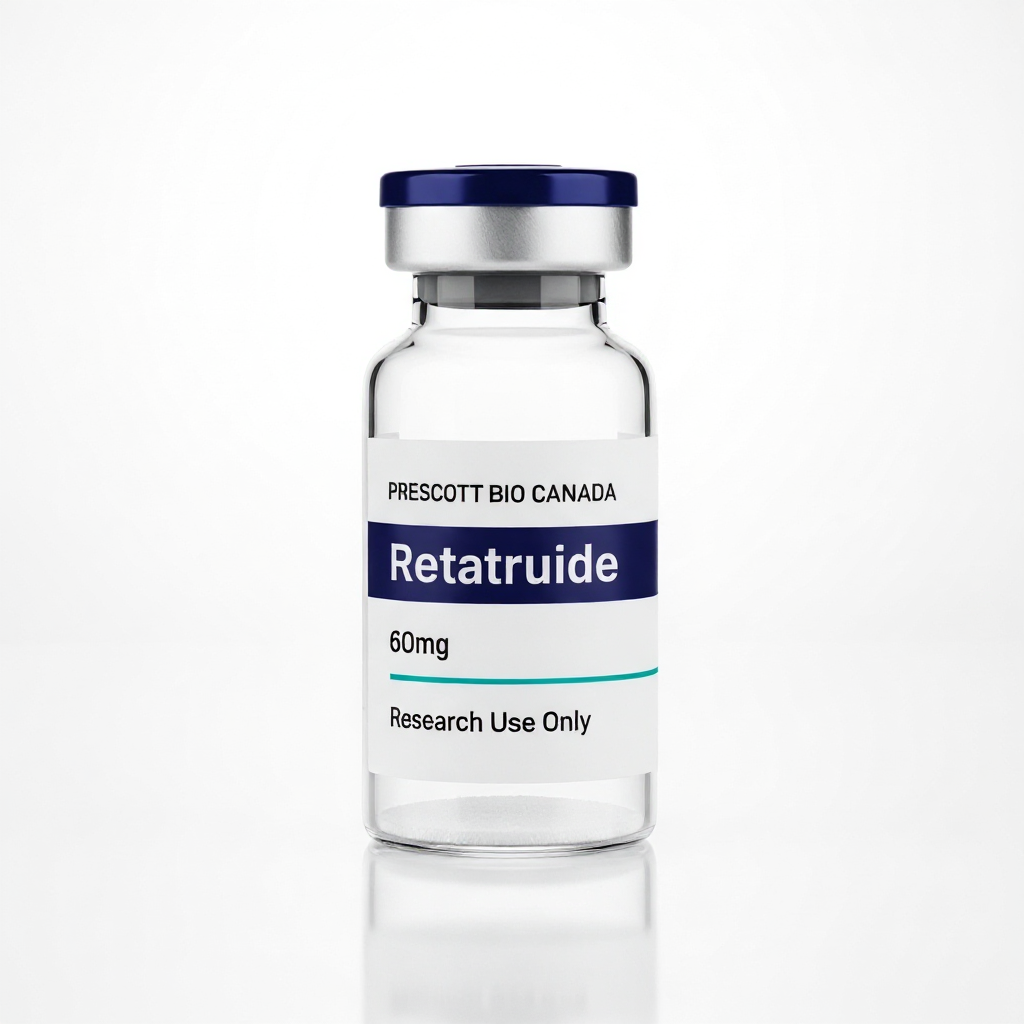
Description
Chemical Identity
Retatrutide is a synthetic peptide with the molecular formula C221H342N46O68 and a molecular weight of 4731.41 Da (CAS number 2381089-83-2). Developed by Eli Lilly under the code LY3437943, Retatrutide is the first triple incretin receptor agonist, simultaneously activating GLP-1, GIP, and glucagon receptors. The amino acid sequence is His(Aib)QGTFTSDVSSYLEGQAAKEFIAWLVKGR with a C18 fatty acid side chain attached via a linker at Lys30 for albumin binding and once-weekly dosing.
Retatrutide represents a novel class of multi-receptor agonists designed to engage three complementary metabolic pathways simultaneously for enhanced weight loss and metabolic improvement.
| Property | Value |
|---|---|
| Molecular Formula | C221H342N46O68 |
| Molecular Weight | 4731.41 Da |
| CAS Number | 2381089-83-2 |
| Mechanism | Triple agonist: GLP-1R + GIPR + Glucagon receptor |
| Research Status | Phase 3 clinical trials |
Research Overview
Retatrutide has been investigated in Phase 2 clinical trials with Phase 3 trials ongoing, demonstrating unprecedented weight loss results among incretin-based compounds. The tri-agonist mechanism engages three complementary metabolic pathways: GLP-1 receptor activation reduces appetite and slows gastric emptying; GIP receptor activation enhances insulin secretion and may contribute to adipose tissue metabolism; glucagon receptor activation increases energy expenditure, hepatic lipid oxidation, and thermogenesis.
The addition of glucagon receptor agonism distinguishes Retatrutide from dual agonists like tirzepatide, providing a mechanism for increased energy expenditure that complements the appetite-suppressing effects of GLP-1R and GIPR activation.
Key areas of published research include:
- Weight Loss Efficacy: Phase 2 trial results demonstrated up to 24.2% body weight reduction at 48 weeks at the highest dose, exceeding results achieved by dual agonists in comparable trial designs and representing the largest weight reduction reported for any pharmacological intervention at that time.
- Metabolic Improvement: Clinical data showed significant improvements in glycemic control, insulin sensitivity, and lipid profiles, supporting the multi-receptor approach for comprehensive metabolic disease management.
- Triple Receptor Pharmacology: Retatrutide has been instrumental in establishing the therapeutic rationale for triple incretin agonism, demonstrating that glucagon receptor activation contributes meaningfully to weight loss through enhanced energy expenditure.
Retatrutide is currently in Phase 3 clinical development. No regulatory approvals have been granted.
Specifications
All Retatrutide supplied by Prescott Bio Canada is manufactured to research-grade standards.
| Specification | Detail |
|---|---|
| Purity | >98% (HPLC) |
| Form | Lyophilized powder |
| Appearance | White to off-white powder |
| Storage (lyophilized) | -20°C, protected from light |
| Storage (reconstituted) | 2-8°C, use within 30 days |
| Solubility | Soluble in sterile water or appropriate buffer |
Each vial is accompanied by a Certificate of Analysis (COA) documenting purity, identity, and endotoxin testing.
Research Applications
Retatrutide is supplied exclusively for in vitro and in vivo laboratory research. Published experimental applications include:
- Triple incretin receptor agonism and multi-receptor pharmacology research
- Glucagon receptor-mediated energy expenditure and thermogenesis studies
- Obesity and metabolic disease pathway research
- Comparative studies with dual (GLP-1/GIP) and single receptor agonists
- Hepatic lipid metabolism and NAFLD/NASH research
Researchers should consult the primary literature and institutional review protocols before designing experiments with Retatrutide.
Storage and Handling
Lyophilized powder: Store at -20°C in the original sealed vial, protected from light and moisture. Under these conditions, Retatrutide maintains stability for up to 24 months.
Reconstituted solution: Reconstitute with sterile water or appropriate buffer. Store reconstituted Retatrutide at 2-8°C and use within 30 days. Avoid repeated freeze-thaw cycles.
Handling precautions: This product is intended for research use only (RUO). Not for human or veterinary diagnostic or therapeutic use. Handle using standard laboratory safety practices including appropriate PPE.