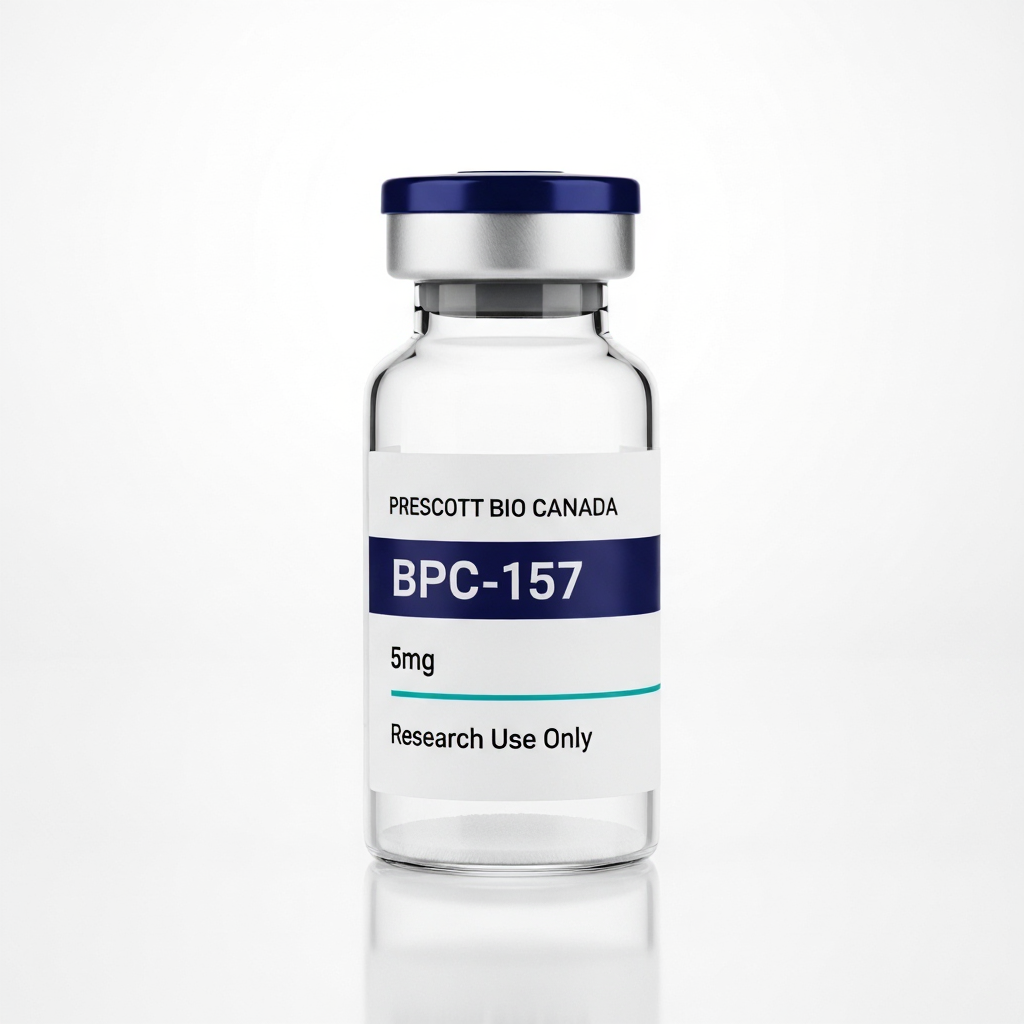
Description
Chemical Identity
Sermorelin is a synthetic 29-amino acid peptide analog of growth hormone-releasing hormone (GHRH) with the molecular formula C149H246N44O42S and a molecular weight of 3357.88 Da (CAS number 86168-78-7). Sermorelin corresponds to the first 29 amino acids of the 44-amino acid native GHRH, representing the minimum fragment required for full biological activity at the GHRH receptor. It is the native (non-modified) sequence without amino acid substitutions for DPP-IV resistance.
Sermorelin was the first GHRH analog approved for clinical use, marketed as Geref for diagnostic evaluation and treatment of growth hormone deficiency in children. It was subsequently withdrawn from the US market for commercial reasons, though it continues to be available through compounding pharmacies.
| Property | Value |
|---|---|
| Molecular Formula | C149H246N44O42S |
| Molecular Weight | 3357.88 Da |
| CAS Number | 86168-78-7 |
| Structure | GHRH(1-29)-NH2 (native sequence) |
| Research Status | Previously FDA-approved (withdrawn for commercial reasons) |
Research Overview
Sermorelin has been investigated across clinical and preclinical research in growth hormone physiology, age-related GH decline, and pediatric endocrinology. The primary mechanism involves agonism of the GHRH receptor (GHRH-R) on anterior pituitary somatotrophs, activating the Gs-cAMP-PKA signaling cascade to stimulate GH synthesis and pulsatile release. Unlike exogenous GH administration, Sermorelin preserves the physiological feedback mechanisms of the GH axis.
Because Sermorelin retains the native GHRH sequence without modifications for protease resistance, it has a shorter half-life (approximately 10-20 minutes) compared to modified analogs like CJC-1295. This pharmacokinetic profile produces acute, physiological GH pulses similar to natural GHRH secretion patterns.
Key areas of published research include:
- Growth Hormone Deficiency: Clinical trials established Sermorelin’s efficacy for stimulating growth in children with GH deficiency through pituitary GHRH receptor activation, leading to FDA approval as a diagnostic and therapeutic agent.
- Age-Related GH Decline: Research has examined Sermorelin for somatopause (age-related decline in GH/IGF-1), demonstrating improvements in body composition, sleep quality, and vitality markers in older adults with low IGF-1 levels.
- GHRH Receptor Pharmacology: As the native-sequence GHRH fragment, Sermorelin serves as the reference standard for GHRH receptor studies and comparative pharmacology with modified analogs.
Sermorelin was previously FDA-approved as Geref. Research-grade material is available for preclinical studies.
Specifications
All Sermorelin supplied by Prescott Bio Canada is manufactured to research-grade standards.
| Specification | Detail |
|---|---|
| Purity | >98% (HPLC) |
| Form | Lyophilized powder |
| Appearance | White to off-white powder |
| Storage (lyophilized) | -20°C, protected from light |
| Storage (reconstituted) | 2-8°C, use within 30 days |
| Solubility | Soluble in bacteriostatic water, sterile water, or normal saline |
Each vial is accompanied by a Certificate of Analysis (COA) documenting purity, identity, and endotoxin testing.
Research Applications
Sermorelin is supplied exclusively for in vitro and in vivo laboratory research. Published experimental applications include:
- GHRH receptor pharmacology and reference agonist studies
- Growth hormone axis physiology and pulsatile GH secretion research
- Age-related GH decline and somatopause studies
- Comparative studies with modified GHRH analogs (CJC-1295, tesamorelin)
- Pediatric endocrinology and growth factor research
- Sleep physiology and GH secretion pattern studies
Researchers should consult the primary literature and institutional review protocols before designing experiments with Sermorelin.
Storage and Handling
Lyophilized powder: Store at -20°C in the original sealed vial, protected from light and moisture. Under these conditions, Sermorelin maintains stability for up to 24 months.
Reconstituted solution: Reconstitute with bacteriostatic water or sterile water. Store reconstituted Sermorelin at 2-8°C and use within 30 days. Avoid repeated freeze-thaw cycles. Note that Sermorelin is susceptible to DPP-IV degradation in solution.
Handling precautions: This product is intended for research use only (RUO). Not for human or veterinary diagnostic or therapeutic use. Handle using standard laboratory safety practices including appropriate PPE.