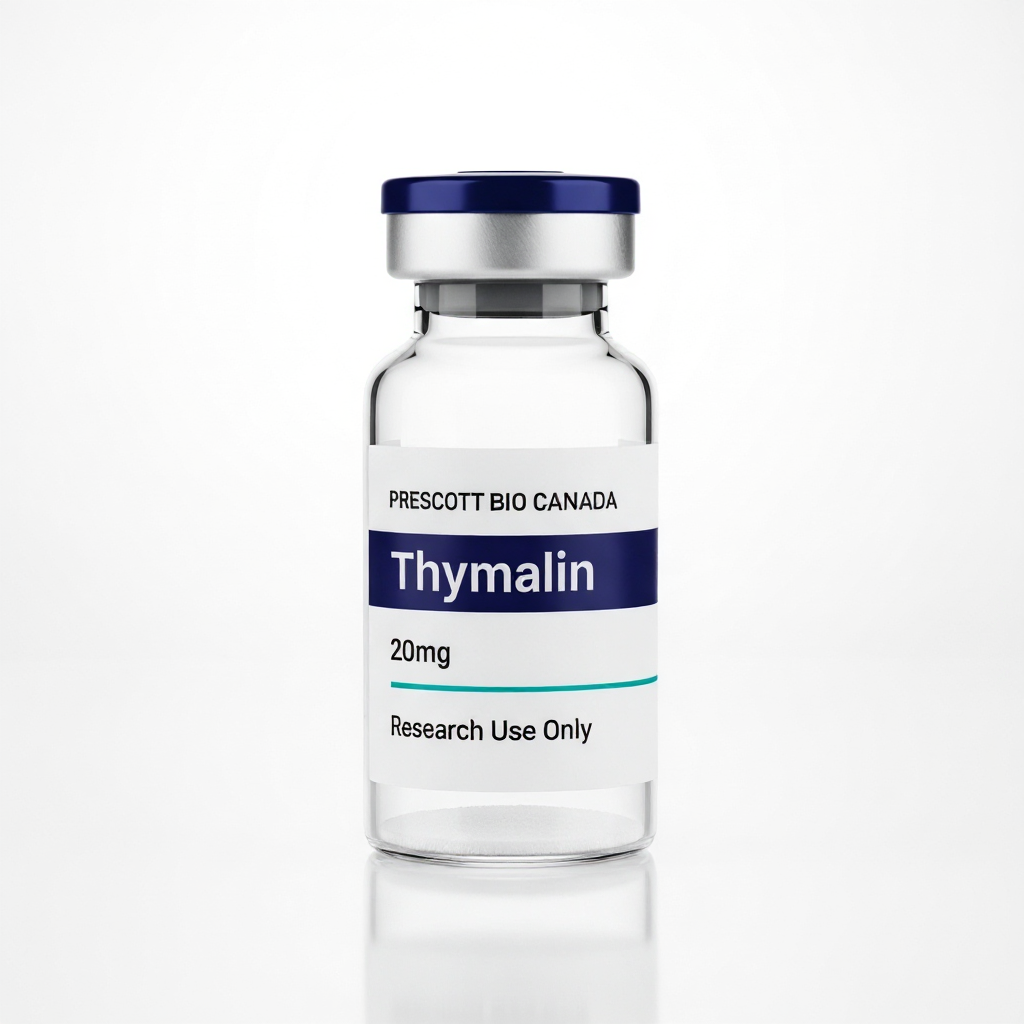
Description
Chemical Identity
Thymalin is a polypeptide complex derived from the thymus gland with a molecular formula of C16H19N3O5 and a molecular weight of approximately 333.34 Da for the primary active dipeptide component (Glu-Trp). Developed by Vladimir Khavinson and Vyacheslav Morozov as part of the bioregulatory peptide research program at the St. Petersburg Institute of Bioregulation and Gerontology, Thymalin contains active dipeptide components including EW (Glu-Trp) and KE (Lys-Glu) that have been identified as the minimum bioactive sequences responsible for immunomodulatory activity.
Thymalin is also known by the following designations: Thymic Factor, Thymalin Peptide, and Thymus Extract Peptide.
| Property | Value |
|---|---|
| Molecular Formula | C16H19N3O5 (active dipeptide EW) |
| Molecular Weight | 333.34 Da (EW dipeptide) |
| CAS Number | Not assigned |
| Active Components | Dipeptides EW (Glu-Trp) and KE (Lys-Glu) |
| Research Status | Approved (Russia) |
Research Overview
Thymalin has been investigated in immunology, aging, and hematopoietic stem cell research, with clinical use in Russia for immune system restoration. The proposed mechanism of action involves promotion of hematopoietic stem cell differentiation toward the thymocyte lineage, supporting T-cell maturation and restoring age-related thymic involution. The active dipeptide components EW and KE have been shown to independently direct stem cell differentiation pathways.
Key areas of published research include:
- Hematopoietic Stem Cell Differentiation: In vitro studies demonstrated that Thymalin-derived peptides promote differentiation of hematopoietic stem cells toward the thymocyte lineage. The active dipeptide components EW (Glu-Trp) and KE (Lys-Glu) showed independent activity in directing this differentiation, providing mechanistic support for Thymalin’s clinical immunorestoring effects.
- Longevity and Aging Studies: A long-term human study of elderly subjects treated with Thymalin in combination with Epitalon (a pineal peptide) demonstrated a 2.0-fold decrease in mortality over 6-year follow-up compared to untreated controls. Treated subjects showed normalization of immune parameters including T-cell counts and CD4/CD8 ratio, along with restoration of melatonin production rhythm. These findings form part of the pineal-thymic axis aging hypothesis.
- Immune Parameter Restoration: Thymalin has been documented to restore immune function parameters in elderly and immunocompromised subjects in Russian clinical studies. The immunomodulatory (rather than immunostimulatory) profile has been proposed as potentially beneficial in conditions of immune dysregulation, including the immunological changes associated with aging (immunosenescence).
Thymalin is approved for clinical use in Russia but has not been evaluated in randomized, double-blind, placebo-controlled trials meeting Western regulatory standards. The majority of published research originates from the Khavinson research group.
Specifications
All Thymalin supplied by Prescott Bio Canada is manufactured to research-grade standards.
| Specification | Detail |
|---|---|
| Purity | >98% (HPLC) |
| Form | Lyophilized powder |
| Appearance | White to off-white powder |
| Storage (lyophilized) | -20°C, protected from light |
| Storage (reconstituted) | 2-8°C, use within 30 days |
| Solubility | Soluble in bacteriostatic water, sterile water, or normal saline |
Each vial is accompanied by a Certificate of Analysis (COA) documenting purity, identity, and endotoxin testing.
Research Applications
Thymalin is supplied exclusively for in vitro and in vivo laboratory research. Published experimental applications include:
- Investigation of hematopoietic stem cell differentiation toward T-cell lineage pathways
- Study of thymic involution, immunosenescence, and age-related immune decline
- Examination of the pineal-thymic axis hypothesis and its relationship to aging and mortality
- Research into bioregulatory dipeptide mechanisms and epigenetic modulation of immune gene expression
Researchers should consult the primary literature and institutional review protocols before designing experiments with Thymalin.
Storage and Handling
Lyophilized powder: Store at -20°C in the original sealed vial, protected from light and moisture. Under these conditions, Thymalin maintains stability for up to 24 months.
Reconstituted solution: Reconstitute with bacteriostatic water or sterile water to the desired concentration. Store reconstituted Thymalin at 2-8°C and use within 30 days. Avoid repeated freeze-thaw cycles.
Handling precautions: This product is intended for research use only (RUO). Not for human or veterinary diagnostic or therapeutic use. Handle using standard laboratory safety practices including appropriate PPE.