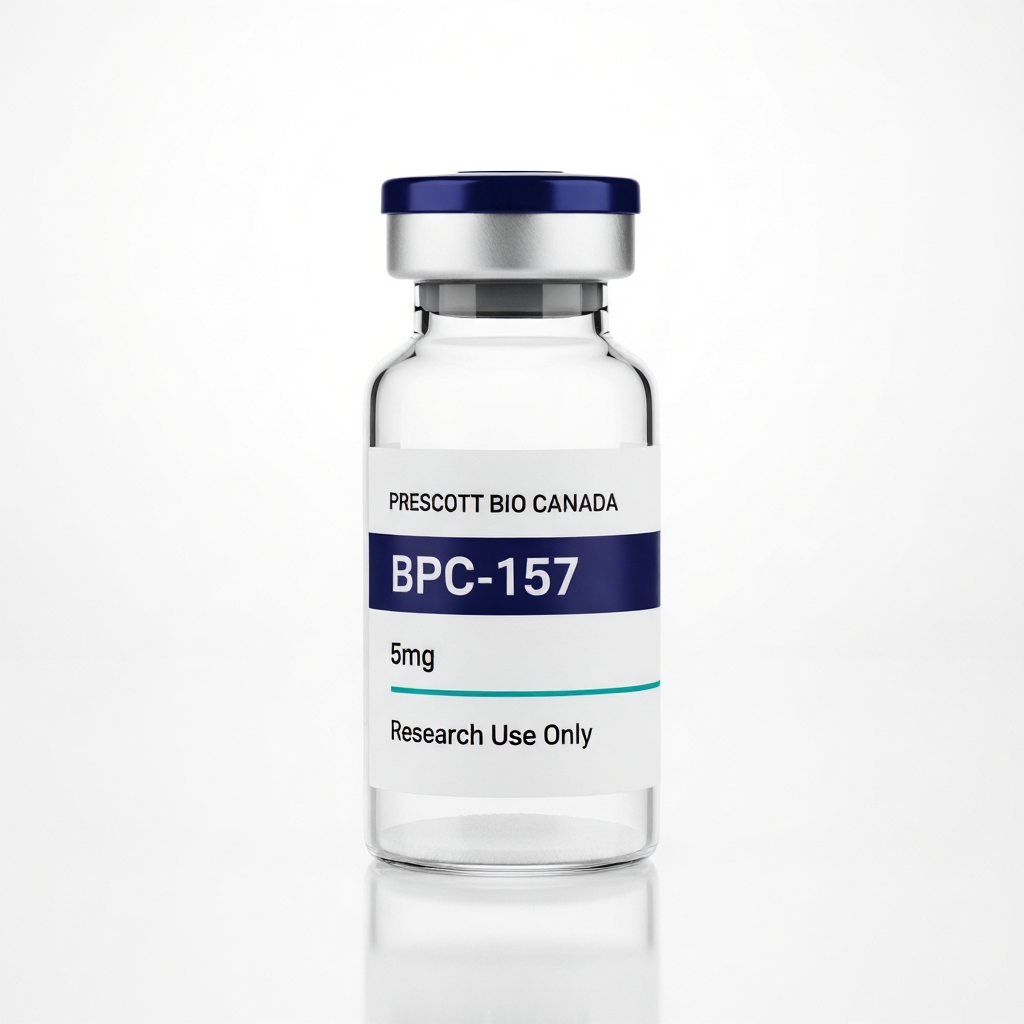
Description
Chemical Identity
VIP analytical reference compound. Molecular weight 3326.8 Da. Also known as: Vasoactive Intestinal Peptide, VIP Peptide, PHM-27. Research status: Phase2.
Research Overview
Vasoactive Intestinal Peptide (VIP) is a 28-amino acid neuropeptide belonging to the secretin/glucagon superfamily. It functions as a neurotransmitter and neuromodulator with diverse roles in vasodilation, smooth muscle relaxation, immune regulation, and circadian rhythm modulation.
VIP exerts its biological effects primarily through two receptor subtypes: VPAC1 (also designated VIPR1) and VPAC2 (VIPR2). Both are class B (secretin family) G-protein coupled receptors that signal predominantly through Gs-alpha coupling to activate adenylate cyclase, generating intracellular cAMP. The resulting cAMP-dependent activation of protein kinase A (PKA) and exchange protein directly activated by cAMP (Epac) mediates the majority of VIP’s downstream effects.
VPAC1 is widely expressed in the lung, liver, gastrointestinal tract, thymus, and brain, and is the dominant VIP receptor on T lymphocytes, macrophages, and dendritic cells. It binds VIP and PACAP with approximately equal affinity (Kd in the low nanomolar range). VPAC2 has a more restricted expression pattern, with high levels in smooth muscle, the suprachiasmatic nucleus, thalamus, pancreatic acinar cells, and mast cells. VPAC2 also binds both VIP and PACAP, but with somewhat different downstream signaling kinetics.
Pulmonary arterial hypertension (PAH) is among the most clinically investigated applications of VIP. Patients with idiopathic PAH have been found to have reduced VIP expression in lung tissue and reduced serum VIP levels compared to healthy controls. In a small open-label study, inhaled VIP (100-200 micrograms daily for 3 months) in 20 patients with PAH produced significant improvements in mean pulmonary arterial pressure (reduction of approximately 13 mmHg), pulmonary vascular resistance, cardiac output, and 6-minute walk distance. These effects were accompanied by improvements in right ventricular function assessed by echocardiography.
Key published studies on VIP include: “Vasoactive intestinal peptide as a new drug for treatment of primary pulmonary hypertension” (Journal of Clinical Investigation, 2003); “VIP in experimental colitis and inflammatory bowel disease models” (Annals of the New York Academy of Sciences, 2003); “Neuroprotective effects of VIP in Alzheimer disease models” (Journal of Molecular Neuroscience, 2000). These findings should be interpreted within the context of the experimental models and conditions described in each publication.
Research Context
Vasoactive Intestinal Peptide (VIP) is a 28-amino acid neuropeptide first isolated from porcine small intestine by Sami Said and Viktor Mutt in 1970. Originally identified based on its potent vasodilatory properties, VIP has since been recognized as a pleiotropic signaling molecule with far-reaching roles in the nervous system, immune system, gastrointestinal tract, cardiovascular system, and endocrine regulation. It belongs to the secretin/glucagon superfamily of peptides, which also includes pituitary adenylate cyclase-activating polypeptide (PACAP), secretin, glucagon, and growth hormone-releasing hormone (GHRH), all of which share structural homology and signal through related class B G-protein coupled receptors.
VIP is widely distributed throughout the central and peripheral nervous systems, where it functions as a neurotransmitter, neuromodulator, and neurotrophic factor. In the brain, VIP-containing neurons are found in the cerebral cortex, hippocampus, hypothalamus (particularly the suprachiasmatic nucleus, the master circadian clock), amygdala, and brainstem. In the peripheral nervous system, VIP is a major neuropeptide of parasympathetic and sensory neurons innervating the gastrointestinal tract, respiratory tract, urogenital system, and blood vessels.
The VIP gene (located on chromosome 6q25) encodes a 170-amino acid preproprotein that is processed to yield VIP along with a related peptide, peptide histidine methionine (PHM-27) in humans or peptide histidine isoleucine (PHI) in rodents. Both VIP and PHM/PHI are co-released from neurons and exert overlapping but distinct biological effects through shared receptor systems.
Specifications
| Sequence | His-Ser-Asp-Ala-Val-Phe-Thr-Asp-Asn-Tyr-Thr-Arg-Leu-Arg-Lys-Gln-Met-Ala-Val-Lys-Lys-Tyr-Leu-Asn-Ser-Ile-Leu-Asn |
| Molecular Weight | 3326.8 Da |
| Molecular Formula | C147H237N43O43S1 |
| CAS Number | 37221-79-7 |
| Purity | >=98% (HPLC) |
| Appearance | White to off-white lyophilized powder |
| Format | Lyophilized powder, sterile filtered |
| Solubility | Soluble in bacteriostatic water, sterile water, or normal saline |
| Storage | Store at -20°C (lyophilized). Reconstituted: 2-8°C, use within 30 days |
| Shipping | Ambient temperature (stable in lyophilized form) |
Each lot is accompanied by a Certificate of Analysis (COA) documenting purity, identity, and endotoxin testing results.
Research Applications
VIP reference compound has been documented in the published scientific literature across the following in vitro and preclinical research areas:
- Receptor Signaling: VPAC1 and VPAC2
- Vasodilation Mechanism
- Neuroprotective Effects
- Immune Regulation
- Gut-Brain Axis and Circadian Regulation
- Pulmonary Arterial Hypertension
- Acute Respiratory Distress and COVID-19
- Inflammatory Bowel Disease
Researchers are advised to consult the primary literature for detailed experimental protocols, concentrations, and conditions relevant to their specific area of investigation involving VIP.
Storage and Handling
VIP is supplied as a lyophilized powder and should be stored at -20°C upon receipt for long-term stability. Protect from light, moisture, and repeated temperature fluctuations. Allow the sealed vial to equilibrate to room temperature before opening to prevent condensation and moisture absorption.
For reconstitution, add sterile water or an appropriate buffer slowly along the vial wall to avoid foaming. Gently swirl to dissolve — do not vortex. Reconstituted VIP solutions should be stored at 2-8°C and used within 30 days. Aliquoting is recommended to minimize freeze-thaw cycles. Consult the Safety Data Sheet (SDS) for detailed handling and disposal guidance.
For laboratory research use only (in vitro). Not for human or animal use. Not for diagnostic, therapeutic, or clinical purposes. VIP is supplied as an analytical reference compound for use by qualified research personnel at accredited institutions. Prescott Bio Canada does not provide guidance on administration, dosing, or use in living organisms.